

Buying a house in Nigeria can become one of the biggest financial decisions you will ever make. The asking price gives you one number, but it does not tell you what the property will actually cost.
Nigeria’s latest inflation data shows a 15.91% all-items inflation rate and 17.52% food inflation rate under the rebased Consumer Price Index. Rising living costs make it even more important to understand your finances before you commit to a property.
A ₦20 million house can cost you less than a ₦15 million house.
That may sound strange, but consider what happens when the cheaper property needs ₦3 million in repairs, carries higher service charges and adds significantly to your monthly transport expenses. You may also discover documentation costs, legal fees or infrastructure problems after you agree on the purchase price.
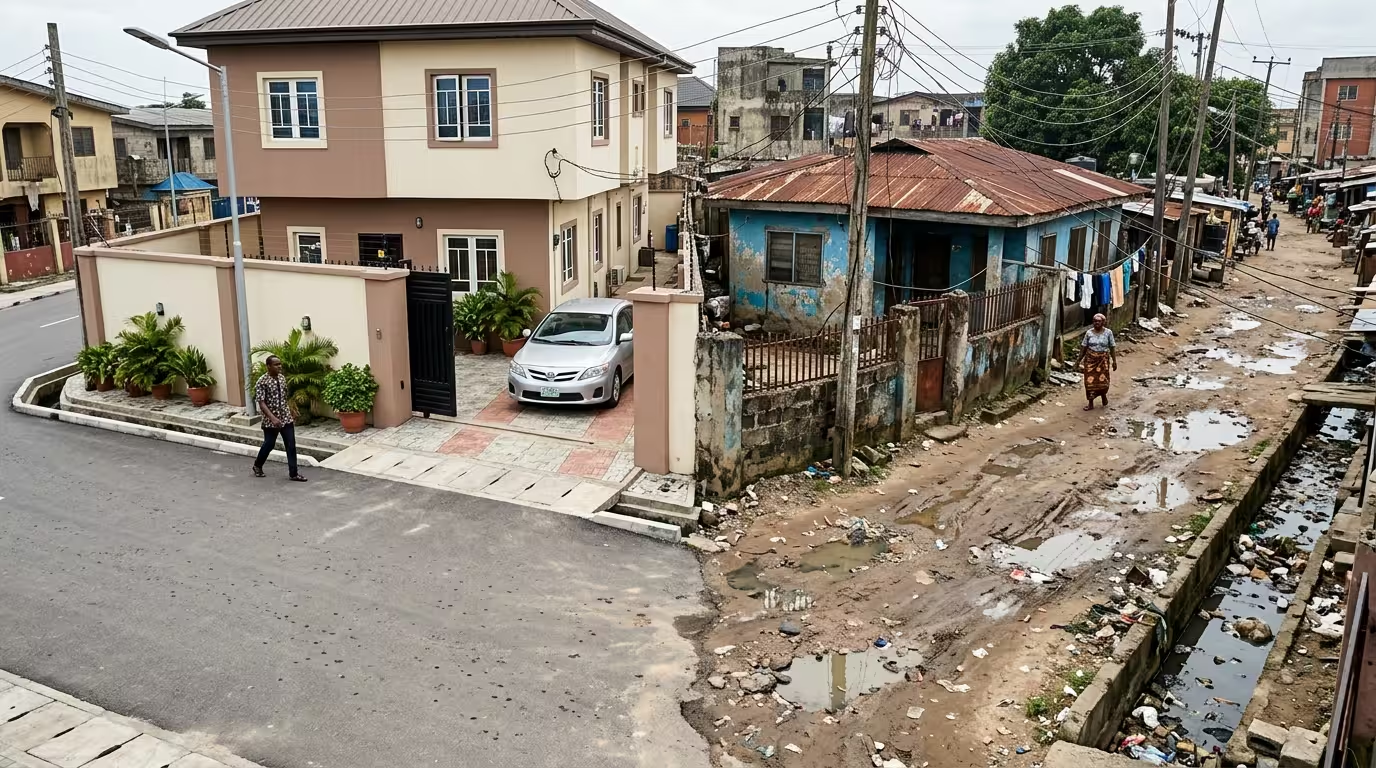
At iPropty, we believe you should judge a property by the cost of owning it, not simply by the number on the listing.
What Does an Affordable House Really Mean?
An affordable house does not have one universal price.
Your income, savings, deposit, financing options, existing obligations, location and recurring expenses determine what you can comfortably afford.
You should therefore ask a better question than:
“Can I afford this house?”
Ask:
“Can I buy, occupy, maintain and finance this house without putting my finances under unnecessary pressure?”
Nigeria still faces a major housing challenge. The Federal Ministry of Housing and Urban Development’s National Housing Data Technical Committee estimated the country’s 2025 housing deficit at 14.925 million housing units. The Ministry has also reported approximately 15.2 million structurally inadequate housing units, which represents a different measure of the country’s housing challenge.
The housing shortage creates demand, but demand does not make every property a good purchase.
Calculate the True Cost of the Property
The purchase price should only form the starting point of your calculation.
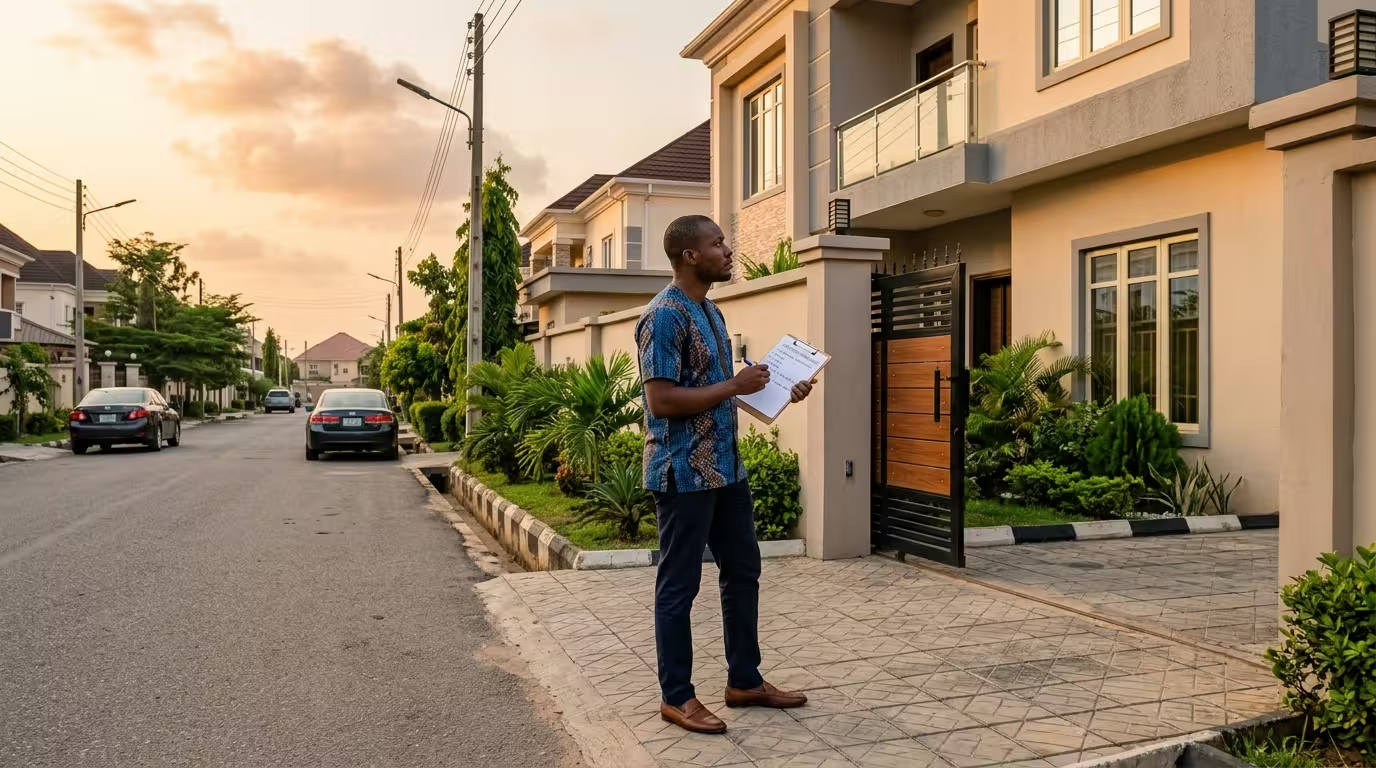
Your real property cost can include:
- Purchase price
- Legal fees
- Agency fees
- Survey costs
- Documentation and registration
- Stamp duties
- Renovation
- Immediate repairs
- Moving expenses
- Service charges
- Insurance
- Financing costs
- Maintenance
- Utility costs
- Transport costs
- Property management costs if you live away from the property
For example, imagine two houses.
House A costs ₦20 million.
It requires ₦500,000 in immediate repairs, sits in an accessible neighbourhood and has reliable infrastructure.
House B costs ₦15 million.
It requires ₦3 million in repairs, sits far from your workplace and adds significantly to your monthly transport expenses.
House B has the lower asking price. House A may still give you the lower overall cost.
You should therefore compare the total cost of ownership, not just the asking price.
An iPropty way to think about affordability
Think of your property cost as:
True Property Cost = Purchase Price + Transaction Costs + Immediate Repairs + Financing Costs + Recurring Costs + Location Costs
You do not need to calculate every item to the exact naira before you shortlist a property. But you should identify the major costs before you commit your money.
How Location Changes What Affordable Means
A property’s location can change its real cost dramatically.
Consider two properties with similar purchase prices. One may sit close to your workplace, schools, markets and major roads. The other may sit farther away and require long daily journeys.
The second property may look cheaper on a property listing, but you may spend much more on transportation every month.
You should therefore investigate:
- Road access
- Traffic
- Public transportation
- Electricity supply
- Water supply
- Drainage
- Flood risk
- Security
- Healthcare
- Schools
- Markets
- Proximity to your workplace
- Planned infrastructure
- Rental demand if you plan to invest
Visit the neighbourhood at different times of the day. If possible, visit after rainfall. A location can look perfectly fine on a sunny afternoon and reveal serious drainage problems after heavy rain.
Lower-Cost Housing Options in Lagos
Buyers often consider areas outside Lagos’s premium neighbourhoods when they want lower entry prices.
Ikorodu: Check commuting times, roads, drainage, power supply and transport costs.
Epe: Investigate infrastructure plans, accessibility and title documents before you commit.
Badagry: Consider travel times and infrastructure alongside the property’s price.
Alimosho: Compare neighbourhoods carefully and investigate drainage, roads, security and title status.
Lagos outskirts: Developing areas can offer lower entry points, but you should investigate ownership, approvals, infrastructure and accessibility.
Do not treat any location as automatically affordable. Prices can vary significantly within the same local government area.
Lower-Cost Housing Options in Abuja
Abuja buyers can also find lower entry points outside the city’s premium districts.
Lugbe: Consider traffic, drainage, power, road access and the airport-corridor effect.
Kubwa: Compare neighbourhood infrastructure, accessibility and title documentation.
Kuje: Investigate ownership, infrastructure and development plans before paying.
Bwari: Check utilities, security, roads and documentation carefully.
Gwagwalada: Compare the lower entry price with commuting distance and potential rental demand.
The same rule applies across Nigeria:
Do not compare locations by property price alone. Compare what the location will cost you every month.
What Should You Budget Beyond the House Price?
Before you pay, create a separate budget for costs outside the purchase price.
Legal fees
A property lawyer can review the transaction, investigate ownership and identify legal risks.
Survey costs
A surveyor can help you establish the property’s location, boundaries and survey information.
Agency fees
Confirm the applicable agency charge before you commit to the transaction.
Documentation and registration
Property transactions can involve searches, consent, stamping, registration and other perfection requirements. The exact requirements depend on the property and the jurisdiction.
Renovation and repairs
Budget for painting, flooring, plumbing, electrical work, roofing and other improvements when necessary.
Moving costs
Include transportation, furniture, household equipment and other costs you will incur when you move in.
Service charges
Ask about security, waste disposal, water, cleaning, estate management and other shared costs.
Insurance
Consider appropriate building and contents insurance for your circumstances.
If you live outside Nigeria, also consider currency conversion, local management and maintenance costs.
Should You Buy a Completed House or Build From Scratch?
Your decision should depend on your cash flow, timeline, construction knowledge and ability to supervise the project.
Buying a Completed Property
A completed house lets you inspect the actual building before you commit.
You can:
- Inspect the roof, walls and ceilings.
- Check plumbing and electrical systems.
- Examine drainage.
- Assess the quality of the finishes.
- Identify visible defects.
- Move in faster after completing the transaction.
- Avoid direct exposure to construction delays.
A completed property can also make sense for Nigerians living abroad because it can reduce the difficulty of supervising construction from another country.
However, a completed house can require more capital upfront.
Buying Land and Building
Building gives you greater control over design, materials and construction stages.
You can:
- Design the house around your needs.
- Build for your target tenants.
- Spread construction across different financial periods.
- Choose your preferred finishes.
But construction can introduce additional risks.
Material prices can change. Labour costs can rise. Approvals can take time. Contractors can delay projects. Design changes can increase costs.
Do not compare the price of land with the price of a completed house.
For land, include:
- Survey
- Legal fees
- Title perfection
- Building approvals
- Architectural design
- Engineering and other professional fees
- Infrastructure
- Labour
- Building materials
- Project supervision
- Contingency costs
iPropty Analysis: Compare the total cost of completing each option, not the cheapest starting point.
Verify the Property Title Before You Pay
A beautiful house does not guarantee a safe transaction.

Depending on the property’s history and location, you may encounter documents such as:
- Certificate of Occupancy
- Governor’s Consent
- Deed of Assignment
- Registered Survey
- Excision documents
- Gazette
- Allocation documents
The property’s history determines which documents matter.
A Certificate of Occupancy does not automatically provide the only acceptable proof of interest in every transaction. A transfer of an existing interest may require Governor’s Consent. A Deed of Assignment records the transfer of an interest between parties. Survey documents help establish boundaries and location. Excision and Gazette documents can matter when government acquisition affects the land.
Do not judge a property solely by the name of one document.
Instead, ask a qualified property lawyer to investigate the property’s ownership history and confirm the documents that apply to that particular transaction.
Where Should You Verify the Property?
In Lagos, use the appropriate Lagos State land administration and registry channels for searches.
In Abuja, use the Abuja Geographic Information System (AGIS) for relevant property and land searches.
Do not rely solely on documents supplied by the seller, agent or developer.
If you live abroad, appoint an independent lawyer or qualified property professional who can represent your interests.
Inspect the House Before You Buy
A property listing can show you attractive photographs. It cannot show you every problem.
During your inspection, check:
- Foundation and visible structural cracks
- Walls
- Roof
- Ceiling
- Plumbing
- Water pressure
- Electrical fittings
- Drainage
- Sewage systems
- Doors and windows
- Locks
- Dampness
- Paintwork
- Parking
- Access roads
- Water supply
- Water storage
- Signs of previous flooding
Flooding deserves particular attention in locations with known drainage or flood risks.
Do not rely on a single inspection visit. Visit the property at different times when possible, and speak with people who live around the area.
When Should You Bring in a Professional?
A buyer can identify obvious problems, but a buyer should not treat a personal inspection as a substitute for professional assessment.
A building professional can investigate structural and construction defects.
A surveyor can examine boundaries and survey information.
An Estate Surveyor and Valuer can assess market value and investment potential.
A property lawyer can investigate ownership, title, agreements and legal risks.
iPropty Analysis: Spending money on professional due diligence can save you from spending far more on repairs, litigation or a bad investment.
How Can You Finance an Affordable House?
Your financing option should match your income, savings, eligibility and timeline.
Personal Savings
An outright purchase can remove mortgage interest and monthly loan repayments.
You can also save toward a deposit and finance the purchase gradually.
However, complete your title and legal checks before you release substantial funds.
Mortgage Financing
A mortgage allows you to spread the cost of a property over several years.
Lenders may consider your income, existing obligations, deposit, property value, repayment period and credit profile.
Do not compare mortgages by monthly repayment alone.
Ask about:
- Interest rate
- Total repayment
- Deposit
- Fees
- Insurance
- Loan tenure
- Early repayment conditions
- Other charges
A lower monthly payment can still produce a much higher total repayment.
National Housing Fund
The Federal Mortgage Bank of Nigeria currently states that eligible NHF contributors can access up to ₦50 million through accredited Primary Mortgage Banks. The facility carries a 6% on-lending rate and a maximum 30-year tenor. Contributors need six months of continuous contributions before they can access the facility for eligible housing purposes.
Confirm the latest eligibility requirements with FMBN or an accredited mortgage institution before you rely on the facility.
Diaspora NHF Mortgage Loan
FMBN has also introduced a Diaspora NHF Mortgage Loan for eligible Nigerians living abroad.
FMBN’s published product information provides for a 30% equity contribution, a maximum ₦50 million loan and a maximum 10-year tenor. FMBN’s terms also state that the bank determines the interest rate for the product.
FMBN announced the official launch of the Diaspora NHF Mortgage Loan in London on August 7, 2026. Nigerians abroad should confirm current eligibility, pricing and documentation requirements directly with FMBN or an accredited mortgage institution before applying.
Developer Payment Plans
Some developers allow buyers to pay in instalments.
Before you sign, confirm:
- Total purchase price
- Payment deadlines
- Penalties
- Documentation
- Refund terms
- Handover conditions
- What happens if you miss a payment
A low monthly instalment does not necessarily mean a low total purchase price.
How Interest Rates Can Affect Your Purchase
The broader interest-rate environment can affect borrowing conditions.
The Central Bank of Nigeria retained the Monetary Policy Rate at 26.5% at its July 20–21, 2026 MPC meeting.
The MPR does not equal the mortgage rate you will receive from a lender.
However, interest rates can influence the cost and availability of credit.
If you plan to finance a property, compare the actual mortgage offers available to you rather than assuming that the CBN’s MPR represents your borrowing cost.
7 Red Flags to Watch Before Buying
1. An unusually cheap property
A low price can reflect genuine urgency, but it can also point to legal, structural or location problems.
Investigate before you negotiate seriously.
2. The seller refuses title verification
Walk away from any transaction that discourages independent verification.
3. Someone pressures you to pay immediately
Urgency should never replace due diligence.
Take the time you need to verify the property.
4. Unclear ownership
Find out who legally owns the property and who has the authority to sell it.
5. Unapproved development
Check relevant planning and building approvals before you purchase.
6. Flooding or poor drainage
A beautiful house can become a recurring financial burden if flooding repeatedly damages the property or limits access.
7. Hidden charges
Ask for the complete cost of the transaction before you pay.
Do not discover additional fees after you have committed yourself.
Questions to Ask Before Paying for a House
Before you release your money, get clear answers to these questions:
- Who legally owns the property?
- What title covers the property?
- Has an independent professional verified the title?
- Does anyone dispute the ownership?
- Is the property involved in litigation?
- Are there outstanding charges or debts?
- Does the building have the necessary approvals?
- Does the estate charge service fees?
- Are utility bills outstanding?
- Has the property flooded before?
- Why does the owner want to sell?
- What repairs does the property need?
- What will the transaction cost in total?
- Which documents will you receive?
- When will possession transfer to you?
If you live abroad, ask your representative to document the answers and provide supporting evidence.
Do not rely on verbal assurances.
How to Buy an Affordable House Safely in Nigeria
Follow a clear process before you commit your money.
Step 1: Calculate what you can comfortably afford.
Step 2: Shortlist locations that fit your budget and lifestyle.
Step 3: Compare several properties.
Step 4: Calculate the total cost of each property.
Step 5: Inspect the property and neighbourhood.
Step 6: Verify ownership and title independently.
Step 7: Confirm relevant planning and building approvals.
Step 8: Engage the right professionals for legal, technical and valuation due diligence.
Step 9: Negotiate according to the property’s actual condition and value.
Step 10: Sign the appropriate agreements.
Step 11: Make payments through traceable channels.
Step 12: Complete applicable registration and perfection requirements.
Step 13: Secure your physical and digital property documents.
If you live abroad, appoint professionals who can independently represent your interests.
Do not allow the seller, developer or agent to control every stage of your due diligence.
iPropty Analysis: The Cheapest Property Is Not Always the Most Affordable
When you search for an affordable house, do not let the asking price make the decision for you.
A ₦10 million property with poor documentation, expensive repairs and high transport costs can become a more expensive decision than a ₦20 million property with verified title, better infrastructure and manageable maintenance costs.
The same principle applies to land.
A cheap plot can require expensive title perfection, infrastructure, construction and professional fees before you can turn it into a usable property.
The right property depends on more than what you can pay today.
You should consider what the property will cost you to acquire, finance, occupy, maintain and eventually sell or rent.
That is how you move from finding a cheap property to making a good property decision.
Buy what you can afford. Verify what you are buying. And calculate what the property will really cost you.
That is the difference between finding a house and making a property decision.
Still have questions?
Navigating the real estate market can be complex. Head over to the iPropty Q&A hub to get expert answers, or ask your own question today!
Explore the Q&A Hub