
Nigeria’s inflation rate stands at 15.91%, according to the National Bureau of Statistics (NBS). That figure matters when you manage a property. Your maintenance bills can rise while tenants struggle with higher living costs. At the same time, you still have to fund security, utilities, repairs, cleaning, and other services.
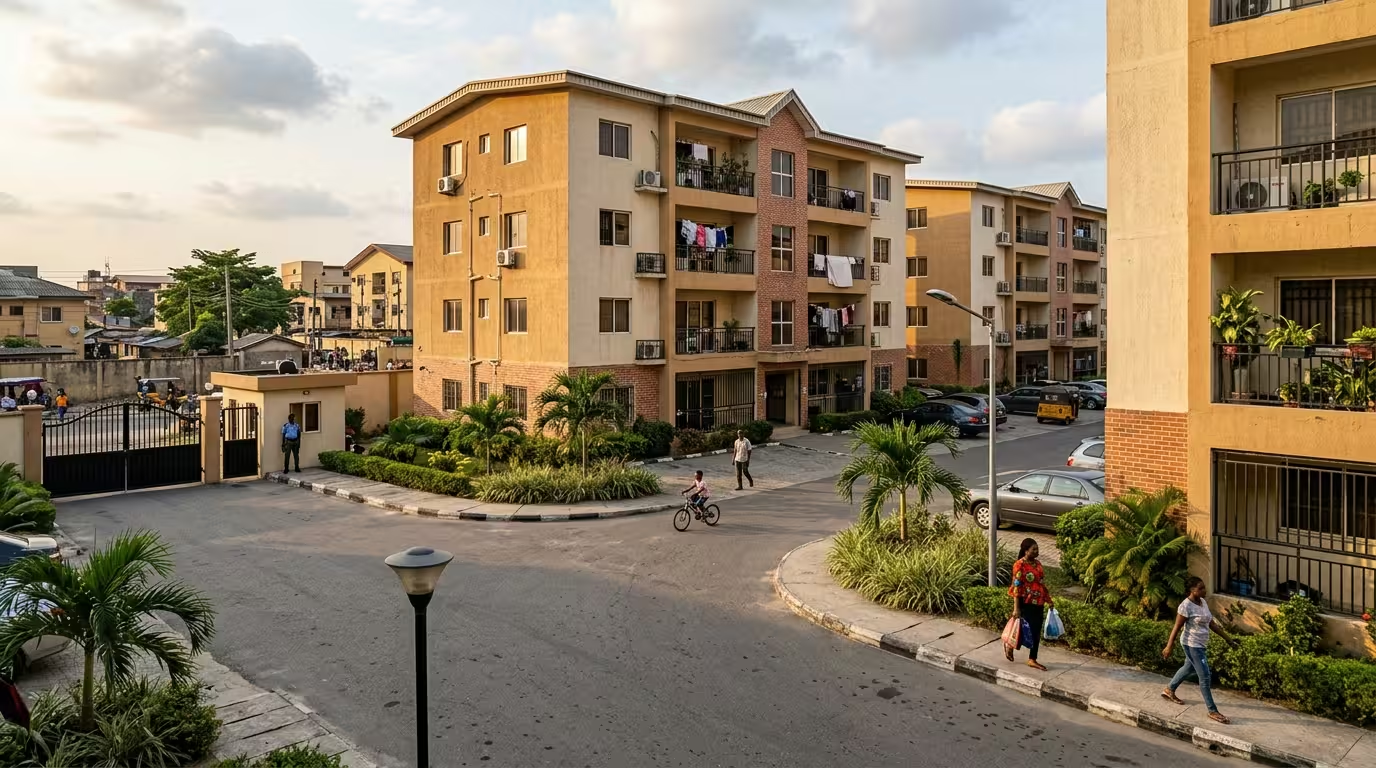
This explains why property management in Nigeria requires more than collecting rent. You must manage the building, tenants, finances, vendors, legal obligations, and daily operations. Poor management can reduce rental income, increase expenses, and damage the property.
So, what problems should you expect, and how can you solve them?
What does property management involve?
Owning a property and managing one are not the same thing. Ownership gives you the asset; management determines how well you operate and protect it.
Property management means supervising a property to protect its condition, income, and long-term value. Your responsibilities can include rent collection, tenancy administration, maintenance, inspections, financial reporting, and tenant relations.
You may also handle insurance, service charges, utilities, repairs, security, and regulatory compliance. The goal is to keep the property functional while protecting the owner’s investment.
This becomes more demanding when you manage multi-tenanted residential, commercial, or mixed-use properties.
Problem 1: Rent Default Can Disrupt Your Cash Flow
Rent default occurs when tenants fail to pay when agreed. Economic pressure can make paying on time difficult, especially when household expenses continue rising.
However, delayed rent still affects your ability to maintain the property. You may struggle to pay artisans, security providers, utility bills, or other operating expenses.
Rent arrears do not always begin with an outright refusal to pay. Poor communication can allow a temporary delay to become a larger dispute.
What should you do?
- Screen tenants before signing a tenancy agreement.
- Check identity, income source, affordability, and previous rental history where possible.
- Establish clear payment dates and default conditions.
- Use reminders to reduce missed payments and maintain proper records to track arrears.
- Contact tenants early instead of allowing outstanding rent to accumulate.
Early communication gives you more options before the problem becomes a major dispute.
Problem 2: Rising Maintenance Costs Can Reduce Your Returns
Inflation affects building materials, spare parts, labour, transportation, and technical services. Currency fluctuations can also increase the cost of imported equipment and materials.
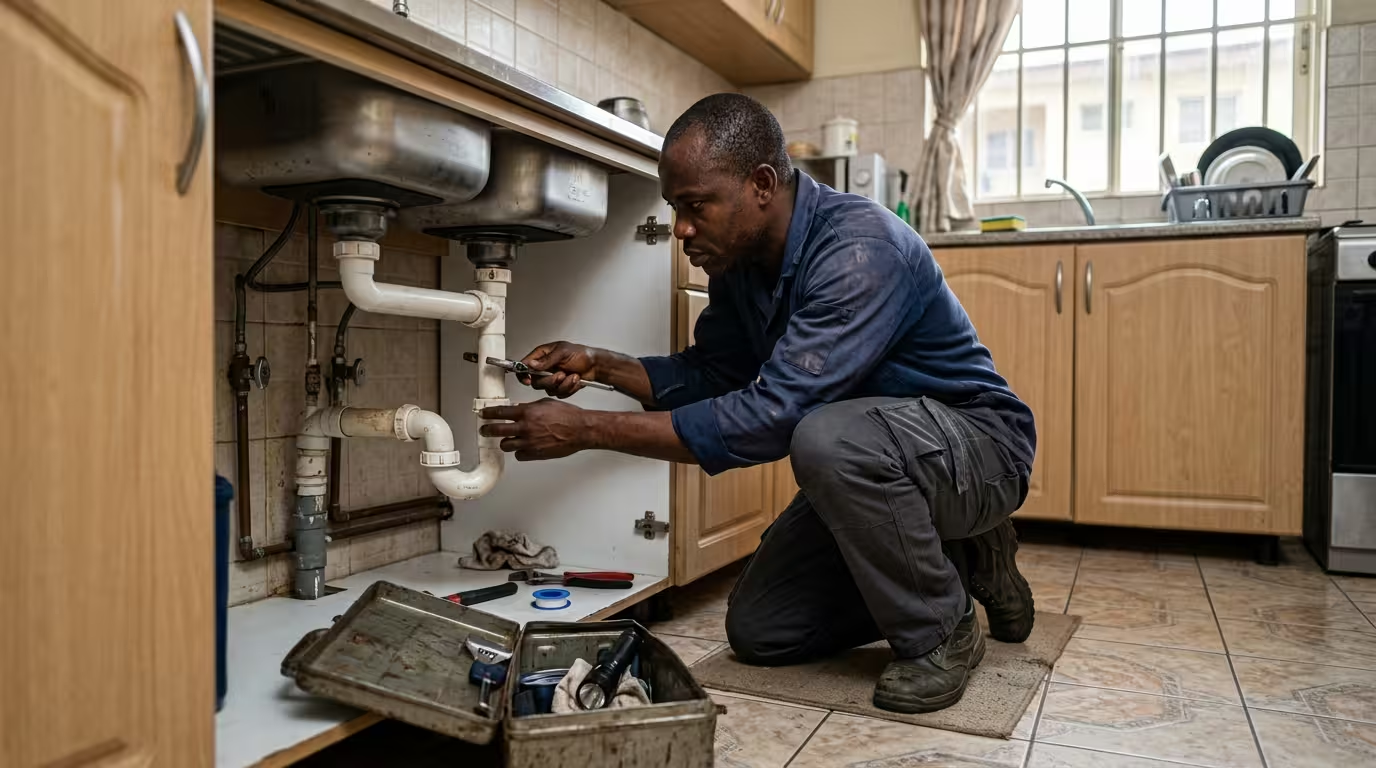
Your property can become more expensive to maintain as cost of materials increases.
The problem becomes worse when you postpone repairs. A minor plumbing fault can become extensive water damage. A small roof leak can also damage ceilings, wiring, and interior finishes.
What should you do?
- Move from reactive to preventive maintenance. Be proactive about repairs.
- Create schedules for plumbing, electrical systems, roofing, drainage, pumps, generators, and air conditioners.
- Keep a maintenance history for every property.
- Negotiate reliable vendor arrangements where possible.
- Bulk-purchase common supplies where you need to.
However, never choose vendors based on whose quotations is the cheapets. Check their workmanship, reliability, pricing, and previous jobs.
Problem 3: Who Should Pay for Repairs?
Repair liability remains a common source of landlord-tenant conflict. Tenants may expect landlords to handle every fault. Landlords may consider some repairs the tenant’s responsibility.
Without clear terms, both parties can delay repairs while the property deteriorates.
If something spoils because of usage, the tenant pays for repairs. Example is Broken WC toilet, Soakaway fill up, window breaks, etc.. They are all types of usage repairs.
But when it’s a structural repair like rook leaking, paint washing off, walls cracking, etc…, the landlord pays for it.
What should you do?
- State repair responsibilities clearly in the tenancy agreement.
- Distinguish normal wear and tear from damage caused by negligence.
- Take photographs during the move-in inspection.
Those records can help resolve disagreements when the tenant leaves.
Problem 4: Poor Infrastructure Can Increase Operating Costs
Infrastructure problems create another layer of expense for property owners. Electricity is a major example.
In 2023, the World Bank reports that 61.2% of Nigeria’s population had access to electricity. But electricity access does not mean reliable supply.
Many properties and facilities depend on generators, inverters, batteries, or solar systems. Water supply, drainage, roads, and waste management can create similar costs.
What should you do?
- Include infrastructure costs when preparing your property budget.
- Where suitable, solar-hybrid systems can reduce dependence on diesel and petrol generators.
- Calculate installation costs, energy demand, maintenance needs, and expected savings before investing in an alternative power system.
Your objective should be lower long-term operating costs.
Problem 5: Security Problems Can Affect Property Value
Security affects both your property and the people occupying it. Risks include theft, vandalism, unauthorized access, illegal occupation, and damage to common facilities.
Vacant properties and construction sites can face additional exposure.
What should you do?
- Assess security according to the property’s location and use.
- You may need fencing, controlled access, lighting, CCTV, guards, or visitor records.
- Larger estates can coordinate security through professional security providers.
- Establish procedures for emergencies and suspicious activity.
Security should remain part of your regular operating budget.
Problem 6: Service Charges Can Create Tenant Disputes
Service charges usually cover shared services within multi-unit properties. These can include security, cleaning, waste disposal, common electricity, water, landscaping, and facility repairs.
Confusion starts when tenants do not understand what their payments cover. They may also resist payment when they cannot see how the money is being spent.
What should you do?
- Explain the services covered by the charge.
- Set payment dates and maintain proper records.
- Provide regular summaries of collections and major expenses where appropriate.
- Separate individual consumption from shared services whenever practical.
Transparency can improve collection and reduce unnecessary disputes.
Problem 7: Tenant Complaints Need a Proper System
A tenant reporting a broken water pump expects a response. Ignoring the complaint can turn a maintenance issue into a relationship problem.
Repeated complaints may also indicate a larger building defect.
What should you do?
- Create a complaint log for every property.
- Record the issue, date, person responsible, vendor assigned, and resolution.
- Give tenants realistic timelines and provide updates when repairs take longer.
- Investigate recurring complaints instead of repeatedly treating the symptoms.
Problem 8: Legal and Regulatory Compliance Can Become Complicated
Property managers must deal with tenancy, building, environmental, taxation, safety, and land-related requirements. These requirements can also differ between states and local jurisdictions.
A procedure that works in one location may not apply elsewhere. Eviction is sensitive because landlords cannot remove tenants through self-help measures.
What should you do?
- Use properly drafted tenancy agreements.
- State rent terms, duration, renewal, maintenance, default, notices, and dispute procedures.
- Follow the applicable statutory notice and court procedures when recovering possession.
- Where a dispute becomes complex, involve a qualified property lawyer.
- Keep copies of agreements, receipts, notices, inspection reports, and relevant correspondence.
Landlord-tenant rules can vary by state and by the circumstances of a tenancy. Do not assume that a procedure that works in one part of Nigeria automatically applies elsewhere.
Good documentation strengthens your position when disagreements arise.
Problem 9: Rent Reviews Can Push Tenants Out
Rent reviews can become controversial when operating costs increase. You need to protect your income, but excessive increases can create vacancies.
A rent that is too low can also leave you unable to cover rising expenses.
What should you do?
- Compare similar properties before reviewing the rent.
- Consider location, condition, amenities, demand, vacancy levels, and operating costs.
- Communicate proposed changes early and follow the terms of the agreement.
- Aim for sustainable rental income rather than simply the highest advertised rent.
Problem 10: Vacancies Can Quietly Reduce Your Investment Returns
A vacant property produces little or no rental income. Yet you may continue paying for security, maintenance, utilities, marketing, and other expenses.
Overpricing can increase vacancy periods. Poor property condition can also make it harder to attract suitable tenants.
What should you do?
- Price the property using current comparable listings and local demand.
- Keep the property well maintained before marketing it.
- Respond quickly to prospective tenants and make the viewing process efficient.
- Retaining good tenants can also reduce marketing, vacancy, and turnover costs.
Problem 11: Poor Inspection Practices Can Hide Problems
Some owners inspect properties only after tenants report problems. By then, minor defects may have become expensive repairs.
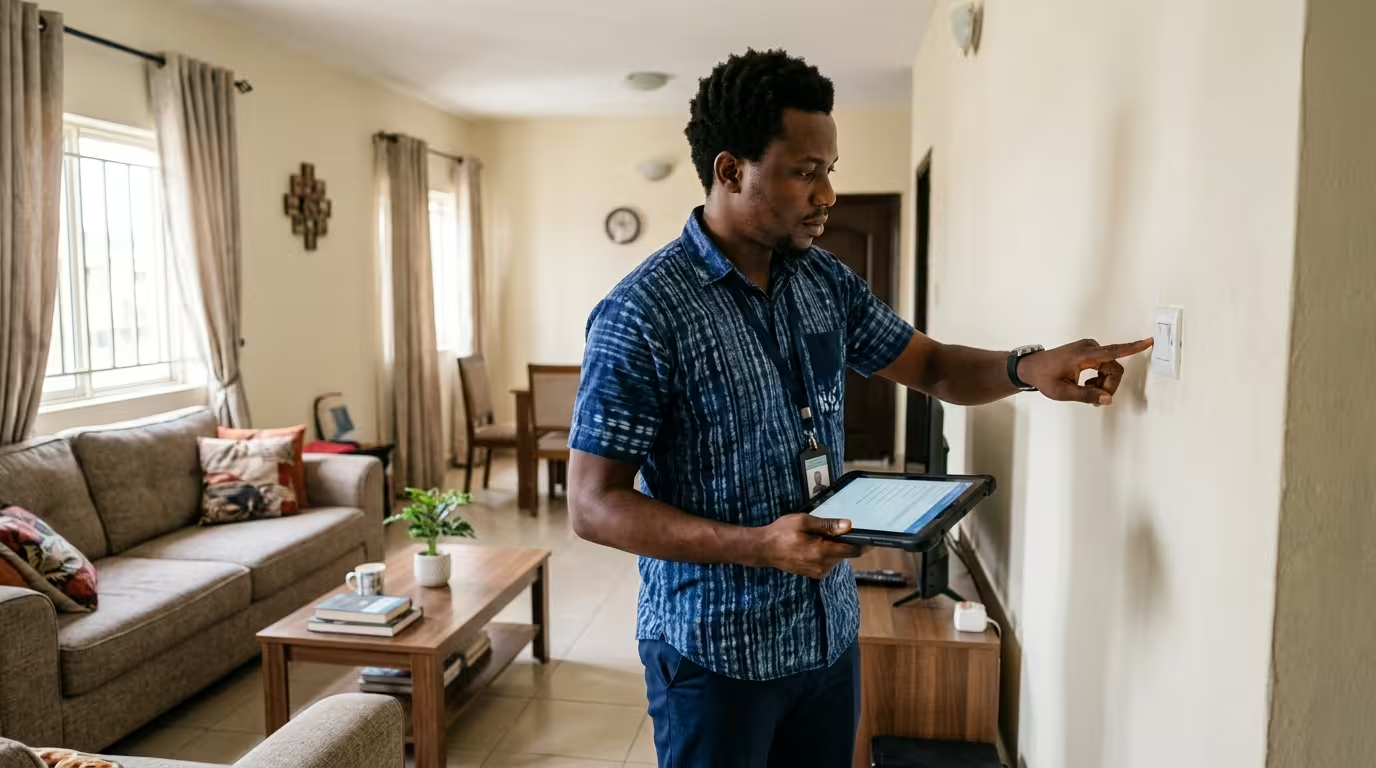
You should conduct a detailed move-in inspection and document the property’s condition. Periodic inspections should follow the tenancy agreement. An exit inspection should also document the condition before another tenant moves in.
Regular inspections help identify damage, unauthorized alterations, and maintenance needs early.
Problem 12: Unverified Vendors Can Increase Repair Costs
Poor artisans can create repeat repairs and additional expenses. You may pay for the same problem several times when the first repair fails.
What should you do?
- Build a database of trusted artisans and service providers.
- Check their previous work before assigning major repairs.
- Agree on the scope, price, materials, and completion timeline before work begins.
- For larger projects, use payment milestones and inspect completed work.
- Keep vendor records alongside maintenance histories.
This makes future repairs easier to plan and compare.
Financial Reporting Shows Whether Your Property Performs
Rent received does not equal profit. You also need to account for maintenance, utilities, security, vacancies, service charges, management fees, taxes, and other expenses.
A property can generate substantial rental income and still perform poorly when operating costs, arrears, vacancies, and maintenance consume too much of that income.
What should you do?
- Prepare regular property-level financial reports.
- Track rent received, arrears, expenses, maintenance, vacancies, and net income.
- Keep receipts and supporting documents for major expenses.
- Separate property finances from personal spending.
This gives you a clearer picture of the property’s actual performance.
Technology Can Reduce Management Errors
Manual property management creates room for missed payments, lost documents, and delayed maintenance. Digital systems can centralise tenant records, payment reminders, maintenance requests, inspections, and financial reports.
They can also make communication easier between managers, tenants, owners, and vendors.
What should you do?
- Use property-management software where the portfolio justifies it.
- Automate routine reminders and maintain secure digital copies of important documents.
- Use technology to support personal service rather than replace it.
Some complaints still require judgement, negotiation, and direct communication.
Emergency Problems Require More Than Normal Maintenance
Property emergencies can happen outside working hours. Examples include burst pipes, major electrical faults, flooding, security breaches, and serious equipment failures.
Waiting until morning can increase damage and costs.
What should you do?
- Create an emergency response procedure for every managed property.
- Keep emergency contacts for plumbers, electricians, security providers, and other critical vendors.
- Establish spending limits for urgent repairs.
This allows managers to respond quickly without waiting for unnecessary approvals.
Skilled Management Matters
A property manager needs more than rent-collection skills. The job requires financial management, maintenance knowledge, communication, negotiation, documentation, and problem-solving.
Complex properties may also require Estate Surveyors and Valuers, lawyers, engineers, accountants, or facility managers. Owners should therefore match professional support to the complexity of their property.
Trying to save management costs can become expensive when mistakes affect income or property condition.
Active Management Beats Passive Management
Active management means monitoring the property and addressing problems before they become serious. Passive management waits until tenants complain or something breaks.
The difference can be expensive. Active inspections can identify defects early. Regular financial reviews can expose rising expenses. Tenant communication can prevent small disagreements from becoming formal disputes.
Your management approach should therefore focus on early detection and quick action.
How These Problems Connect
Property management problems rarely happen independently. Inflation raises maintenance costs while reducing tenants’ purchasing power. Lower purchasing power can increase rent arrears and weaken your cash flow.
Reduced cash flow can delay maintenance and affect service delivery. Poor maintenance can then increase vacancies and tenant complaints.
This cycle shows why you need coordinated management rather than isolated solutions.
A Practical Property Management Checklist
Before handing over a property, make sure you have:
- Verified the tenant’s information.
- Signed a clear tenancy agreement.
- Documented the property’s condition.
- Explained repair responsibilities.
- Established rent and service-charge dates.
- Recorded utility responsibilities.
- Created an inspection schedule.
During the tenancy, you should:
- Track rent payments.
- Monitor arrears.
- Record complaints.
- Conduct inspections.
- Monitor maintenance.
- Review expenses.
- Keep financial records.
- Maintain emergency contacts.
You should also review insurance arrangements and statutory obligations periodically.
Check what your policy covers, its exclusions, and the documentation required for claims.
iPropty Insight
Property management is not simply about keeping a building occupied. It involves protecting income, controlling costs, maintaining the property, and managing relationships.
A poorly screened tenant can create arrears. An unclear agreement can create disputes. Delayed maintenance can increase repair costs. Poor reporting can hide losses. Weak security can expose the property to damage.
Passive management can allow all these problems to grow unnoticed. That is why you should treat property management as an active business function.
Your location, property quality, tenant profile, operating costs, and management systems all affect performance. What happens after acquisition can therefore determine whether an investment performs well.
Build clear systems for rent collection, maintenance, inspections, security, finances, documentation, and tenant communication.
Use professional support when the property’s complexity requires it. The goal is not to eliminate every problem.
It is to identify problems early, respond properly, and protect the property’s income and long-term value.
Still have questions?
Navigating the real estate market can be complex. Head over to the iPropty Q&A hub to get expert answers, or ask your own question today!
Explore the Q&A Hub