
The price of land in Ibeju-Lekki has increased threefold in 18 months in 2024. Those who invested at an early stage have made life-changing returns.
That is not an uncommon occurrence. In different parts of Nigeria, there are some areas that are gaining value without the occupants being aware of it. The window of opportunity to buy at the right price is closing quicker than people thought. When buying property in Nigeria, it’s not only what you buy but also where you buy. And at the moment, 5 specific places are outperforming all other markets in the country.
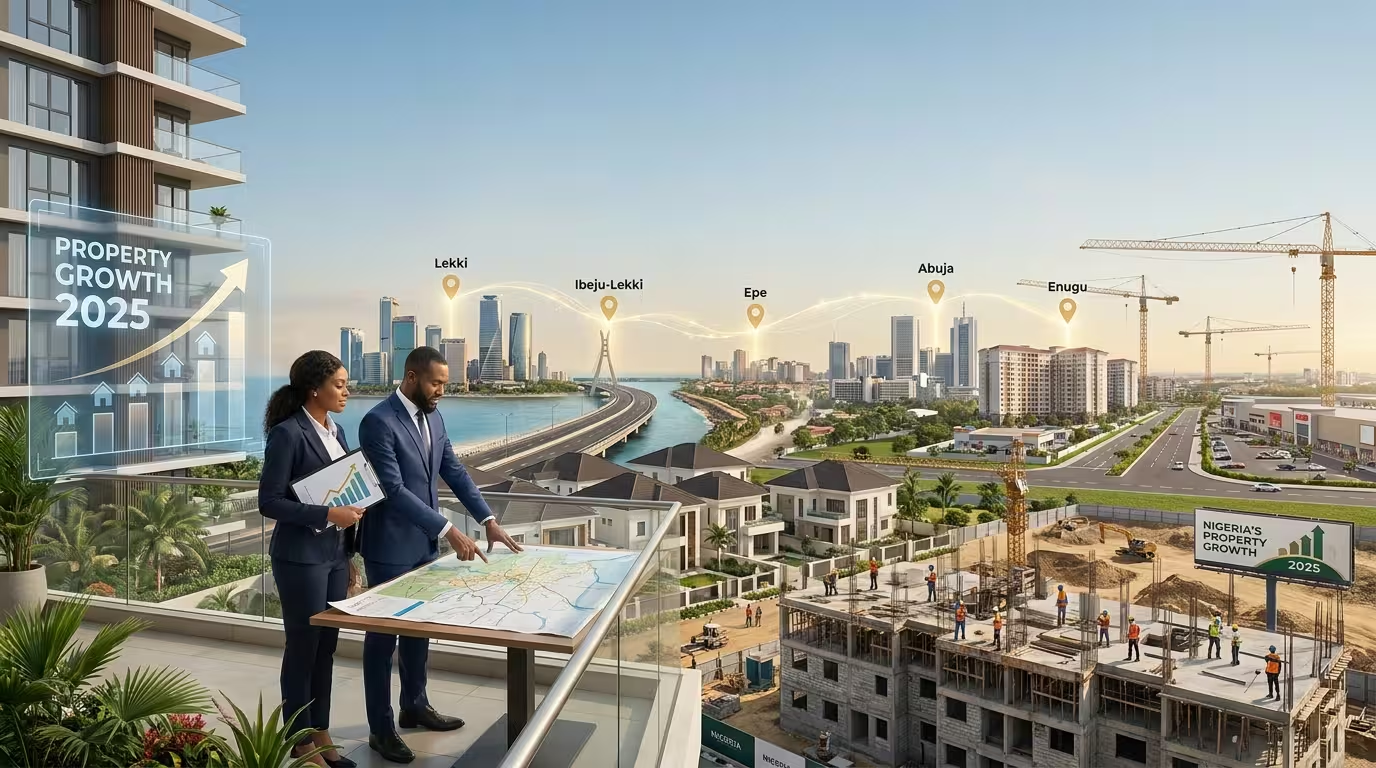
1. Ibeju-Lekki, Lagos
The property market of Ibeju-Lekki is Nigeria’s number one buzz market today. And the reasons cannot be overlooked. The Dangote Refinery, the Lekki Deep Sea Port (LDP), and the Lekki Free Trade Zone are all located within this corridor. These items are not ones that are just being discussed and proposed but are ones that are operating and drawing economic activity into the area daily. Workers need housing. Commercial space is a need for the business. If a major price move is still to come, investors must have land in their hands.
It was not long ago that ₦500,000 was the price of land per plot, and now in many locations in Ibeju-Lekki, it’s ₦5 million and above. Some areas nearer to the refinery have even surpassed that. Its infrastructure is growing at a rapid pace, the road network is being improved, and the population is growing at an urgent pace. All of the major developers in Lagos have laid claim to this. Once you don’t have one, then you’re playing catch-up to people who got ahead of you years ago.
2. Epe, Lagos
Epe is doing in a quiet manner what Ibeju-Lekki did in a loud manner. The price of property here is steadily climbing, but many prospective buyers haven’t yet realized the price is still relatively low. The Epe International Airport, which is being proposed to be built on the site, will be the focal point, but the story is deeper than just that one project. Epe is located on the eastern side of Lagos and has an immediate spillover demand from Ibeju-Lekki and Lekki. Then, as the markets get more costly, buyers and developers naturally start to head further along the corridor towards Epe.

The area also has a high quality of large land parcels, which are one of the most scarce in the Lagos market. Land is being bought up by developers here right now, both in the estate and farm sectors as well as in mixed-use developments. Epe is also a good place for home buyers, as its location near water, green spaces, and relative quietness from central Lagos add to its appeal. The low costs, infrastructure projects, and the rising demand are a great fit that won’t remain permanent.
4. Abuja Airport City — Abuja, Abuja South, and Dimmata-Abuja
For years, Central Abuja has been a pricey place, and the push is forcing buyers to move out to the satellite towns that surround the FCT. The direct beneficiaries of that displacement are Lugbe, Kuje, and Gwagwalada. With the rapid development of these communities, some buyers who can’t afford Maitama or Wuse are seeking out alternatives that can offer them the convenience of being close to the capital. The roads into the city center are getting better and better, estate developers are coming, and there is commercial activity that is clearly increasing.
Lugbe, in particular, is one of the fastest-developing residential communities in the FCT. Just like what happened at Lekki 10 years ago, new estates, shopping, schools, and businesses are setting up their operations here at an alarming rate. The people who buy into these satellite towns now are future buyers, setting them up for the next wave of price appreciation that will result from infrastructure improvements. The pattern is common — Abuja is just following the footsteps of Lagos, which has demonstrated it to the nation before.

4. Asaba, Delta State
Asaba is undoubtedly one of the underrated property markets in Nigeria, and this is why it’s included on this list. The city has had a steady economic development as the capital of the Delta State and a gateway for commercial transit between the South-South and South-East geopolitical zones of the country. Over the past few decades, the middle-class population has been steadily rising due to cross-border trade, government activities, and private sector investments, and such a population needs quality housing.
The Asaba International Airport has also greatly enhanced its connectivity. The city’s skyline is changing much faster than most people realize, as new residential estates, shopping malls, and hospitality developments are mushrooming. In recent years, land prices have increased significantly in the prime communities of Asaba, such as GRA, Cable Point, and Summit. However, Asaba still has amazing value compared to the Lagos and Abuja equivalents. Those who understand this concept earlier than other investors will reap the greatest rewards in what lies ahead.
5. Uyo, Akwa Ibom State
When people come to Uyo for the first time, they are constantly amazed. The city is clean, well planned, and is developing with great deliberation, which is unusual in Nigeria. Under the leadership of successive governors, roads, public areas, and institutional facilities have been constructed, making Uyo a true city to live in. Now, this liveability is directly feeding into an increase in property demand and values.
Uyo’s hotel and hostel industry is flourishing and serves the needs of commuters, tourists, and a growing professional community in the city. Occupancy rates of short-let apartments are reaching the heights of Lagos Island. The value of residential land has grown by a considerable margin in the past three years in established communities such as Ewet Housing Estate and Liberation Layout. The more Nigerians and diaspora investors learn, the more they will want to come to Uyo. The city has essential infrastructure that many property-appreciating markets do not have.
These five locations share some common characteristics.
All of these markets are trending upward. Each of them is experiencing increases in values due to a mix of infrastructure investments, activity, population growth, and supply constraints. Ibeju-Lekki has industrial establishments. Epe has spillover demand and an airport project. The capital city overflows into Abuja’s satellite towns. The city of Asaba is a cross-regional city. Uyo is a city with intentional lifestyles and governance.
The formula will hold regardless of the city. The best places to invest in property are those where people want to move to, jobs are being created, and governments or private investors are working to build. Right now, all five locations check off all of those boxes.
It isn’t whether these markets will continue to grow. They will. The issue is whether you will be in the market before the next price move that will make that much more costly than it is now.
Still have questions?
Navigating the real estate market can be complex. Head over to the iPropty Q&A hub to get expert answers, or ask your own question today!
Explore the Q&A Hub