
Nigeria’s property market is now worth about $2.6 trillion.
That’s not a typo.
Just think about all the houses, apartments, offices, malls, warehouses, and registered properties across the nation. If you add them all up, you’ll see just how large that number is. So, the Ubosi Eleh + Co. report says residential houses are worth the most.
But here’s the part that caught my attention.
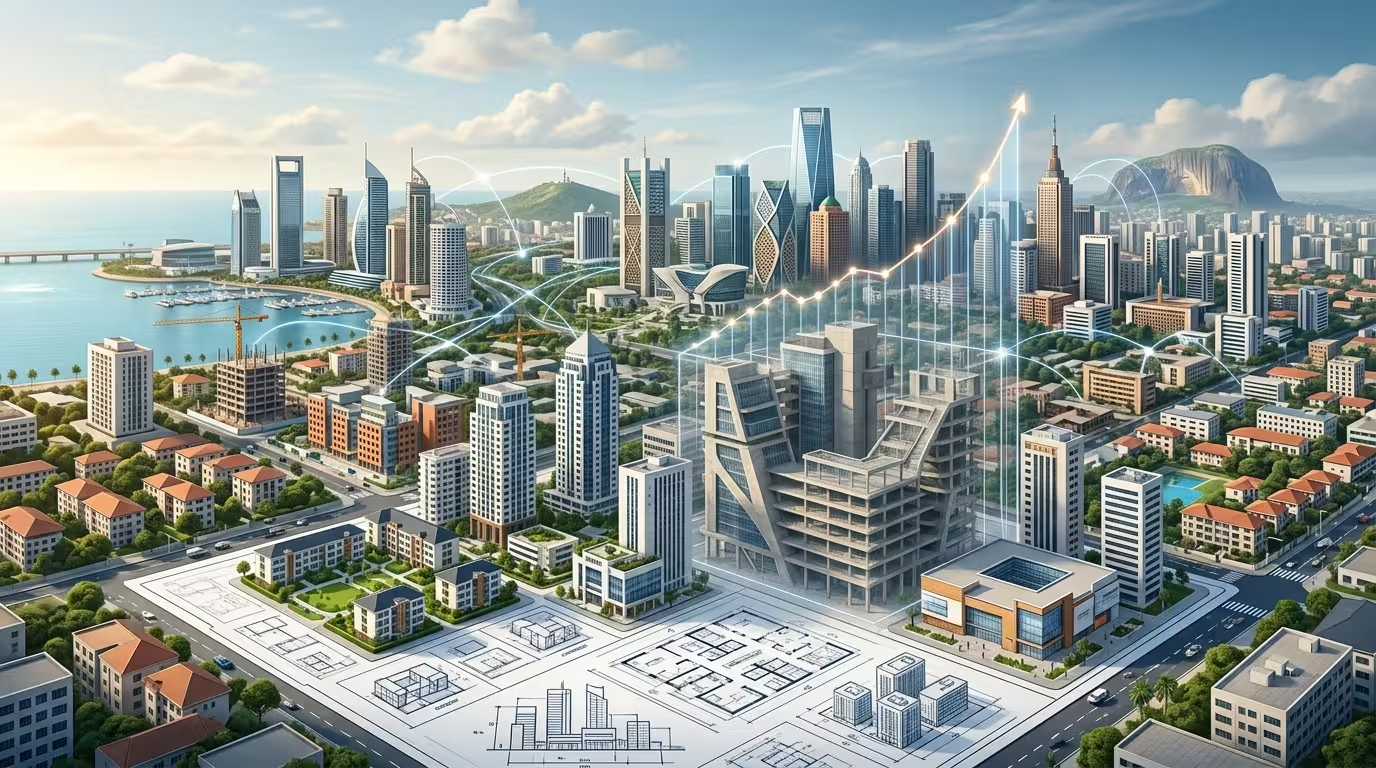
The Nigerian property market is big, contributing over 13.4% to Nigeria’s GDP, but a lot of it still lacks rules. So, the government and industry are pushing for tougher national regulations.
For investors, this story isn’t really about a $2.6 trillion valuation. It’s about what happens next.
Key Takeaways
- Estimated market value: $2.6 trillion
- Housing deficit: More than 22 million homes
- Residential property: Largest share of market value
- Key issue: Calls for stronger nationwide regulation
- Why it matters: Better transparency could improve investor confidence and strengthen consumer protection.
Nigeria’s Property Market at a Glance
| Indicator | Latest Figure |
|---|---|
| Estimated market value | $2.6 trillion |
| Real estate services contribution to GDP | 13.4% |
| Federal Government housing deficit estimate | 15 million homes |
| Industry housing deficit estimate | 22+ million homes |
| Residential property | Largest share of market value |
| Main policy focus | Stronger nationwide regulation |
Why Should You Care?
Imagine buying a used car.
There’s a list of who registered. Someone can confirm it’s yours. If someone tries to sell the same car to three different people, you can figure out who’s doing it.
This should be the same for property.
But you know how it is in Nigeria; we’ve all heard about land getting sold twice, scammy housing projects, ownership fights, and places just left unfinished. Those stories aren’t only bad for buyers. They also make real investors run away.
That’s why we advocate for clearer rules, for more transparency, and to protect consumers.
A Huge Market With an Even Bigger Problem
The report paints an interesting picture.
Nigeria’s property market keeps growing, yet people are struggling to own a home. Why? Because demand is rising faster than supply.
The federal government pegged Nigeria’s housing deficit at 15 million homes. More people are moving into cities because of fast population growth and urban migration, worsening the housing situation.
It’s a bit like trying to fill a stadium with one entrance open. People keep arriving faster than they can get inside.
That pressure shows up in house prices and rents.
Construction Is Getting More Expensive
Developers are also facing another challenge.
The report shows a 50% to 100% surge in construction expenses over the past two years because of price increases for materials, energy, and logistics. This signifies that creating inexpensive housing is significantly more challenging today than in the recent past.
If it’s more expensive to construct, you’ll see the effect in the final price or rent. That’s why a lot of Nigerians are renting instead of buying.
History offers an interesting lesson.
In the past, Nigeria’s banking sector faced issues with inadequate supervision and a lack of trust from the public. With time, more robust oversight improved financial stability, making individuals feel more secure entrusting their money to banks.
The property market should follow a similar path.
No law can eliminate fraud completely. But clearer rules can make it harder for wicked souls to operate and easier for genuine professionals to earn buyers’ trust.
What This Means If You’re Buying Property
If you’re planning to buy land or a home this year, don’t let impressive brochures decide for you. Do your property and document verification.
Invest a little more in checking things out now to avoid years of legal drama later.
What This Means If You’re a Developer
Trust is becoming a competitive advantage.
Should the industry lean towards more regulation, developers who are diligent record-keepers, open communicators, and punctual project completes will probably distinguish themselves further.
Credibility is valuable in a market where confidence is scarce.
iPropty Insight
The biggest story isn’t the $2.6 trillion headline.
Big numbers attract attention. Powerful institutions attract investment.
With better transparency and consumer protection, Nigeria’s property market might become a lot more appealing to pension funds, institutional investors, and long-term capital that are playing it safe.
That won’t solve the housing shortage overnight. But history shows that markets grow faster when investors trust the rules. For now, the opportunity remains enormous.
The challenge is making sure the market grows with the confidence and transparency needed to match its size.
What This Means for You
If you’re buying: Verify titles and approvals before paying any deposit.
If you’re investing: Watch regulatory developments closely. Better rules could improve long-term investor confidence.
If you’re developing: Strong documentation and transparency may become an even bigger competitive advantage.
Still have questions?
Navigating the real estate market can be complex. Head over to the iPropty Q&A hub to get expert answers, or ask your own question today!
Explore the Q&A Hub