

You’ve now decided to construct your very own home. Congratulations. However, there is one thing you can’t do: go to the construction site each day.
Perhaps you are residing overseas and your project is in Nigeria. You live in Lagos, and your land is located in Ibadan, Abeokuta, Enugu or Benin. Or maybe life is sufficiently busy as it is and it isn’t possible to spend every day at a construction site.
Here’s some good news. You don’t need to move into your construction site to successfully build a house in Nigeria.
A good plan, reliable professionals, and suitable systems are enough. Also, a means of involvement even when you are out of sight is what you need.
Let’s see how this can be done.
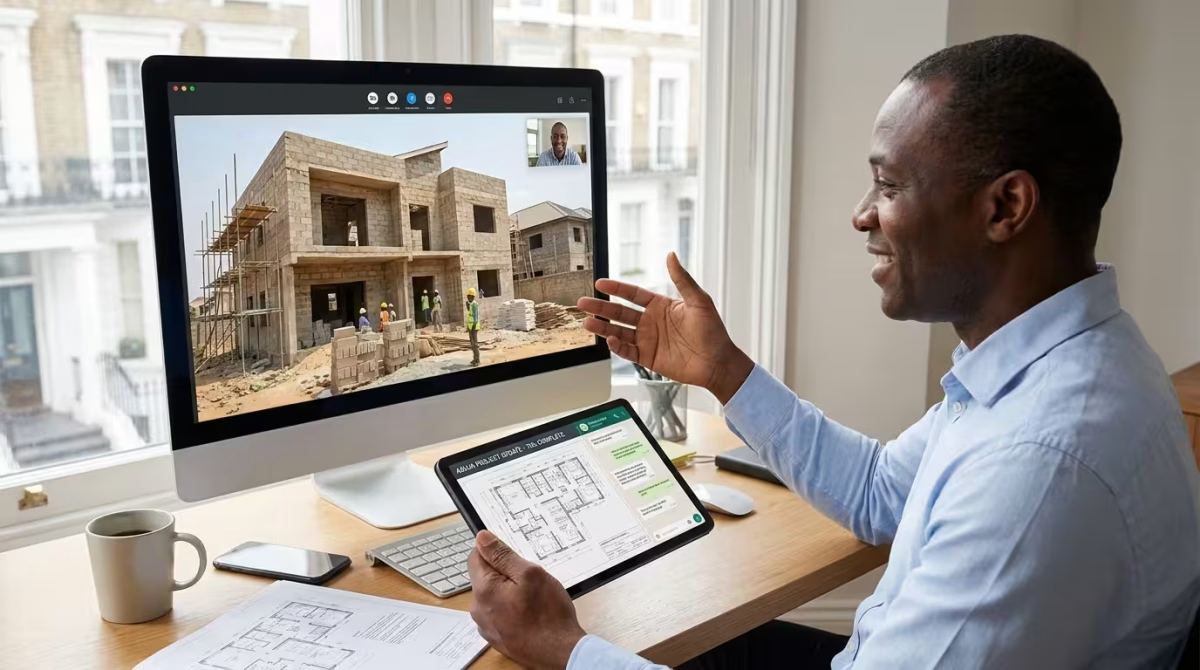
Have a Realistic and Clear Plan
You must have a blueprint of how you want to construct your project. An idea of the cost before you make the first purchase.
When we say realistic, we don’t mean what your positive friend told you over the weekend. We are talking about a budget. The kind that takes into consideration the conditions of building in Nigeria.
The price of construction is volatile. The price for cement today is not guaranteed to be the same as next month. Exchange rates impact materials that are imported. Fuel prices impact the transportation costs. Just as inflation sneaks up on you when you’re least expecting it.
Hence, the need for planning. State what it is that you want in writing. Consider the number of rooms, the layout, and the quality of the finishes. The practical features that would be suitable in Nigeria. such as being well ventilated, storage tanks, security equipment and backup electricity.
Then, you should develop a budget for what you can realistically expect. Try setting aside a 25-30 percent emergency fund based on that. In many cases, projects in Nigeria have faced unplanned price rises. This is due to the owner’s preparation for contingencies.
Hire the right people before you begin!
When you are not on-site for the majority of the time, your team is your biggest asset!
The people that you hire can either make or break the project.
Use well-trained personnel as a first step. The builder should be a registered builder. Most importantly, with the Council of Registered Builders of Nigeria (CORBON). Your architect should also be registered. Registered with the Architects Registration Council of Nigeria (ARCON). Also, your structural engineer should be licensed by COREN.
These registrations aren’t merely fancy names. They can safeguard you against employing individuals who don’t know what they do. It protects you from those who aren’t professional enough.
Engage a quantity surveyor as soon as possible. They help to control project expenses, monitor project costs, and avoid unnecessary expenditures. This sort of monitoring is invaluable when you aren’t able to keep an eye on every delivery in person.
It is also advisable that a licensed surveyor be hired from the start. To accurately define the boundaries of your land. This can prevent you from future land disputes. Rescue you from future drama with neighbors or omo-onile.
First and foremost, request references. Call previous clients. If possible, view completed projects. Don’t trust promises. Check everything before paying!
Organize documentation in a timely manner
Many people tend to get into the middle of the project without completing the paperwork.
Sadly, later can cost a lot of money.
If you are about to build, check your land papers with a trustworthy real estate attorney. If you’ve got a Certificate of Occupancy, Governor’s Consent, or Deed of Assignment, be sure it’s genuine.
Ensure all required approvals and permits have been secured prior to starting work. Further requirements may apply if you live outside of the area. In Lagos projects, for instance, are often subject to environmental and waste management approvals.
Make a digital copy of all documents. Keep them safely on Google Drive, Dropbox or any cloud storage service you are comfortable with. It enables you to access vital information from around the world.
If you live outside Nigeria, you can also leave a power of attorney to a trusted legal representative. Someone who can step in to conduct official business if you need to.
Let Technology Work for You
Today it is easier to manage a project remotely than it used to be a couple of years ago.
Technology is one of the greatest assets. It enables project owners who cannot be on-site to be available and informed
Request pictures and videos from your contractor or site supervisor regularly. It’s best to post updates every day, though two or three times a week will work as well.
These updates should include progress on the work, delivery of materials, task completion, and any issues faced on location.
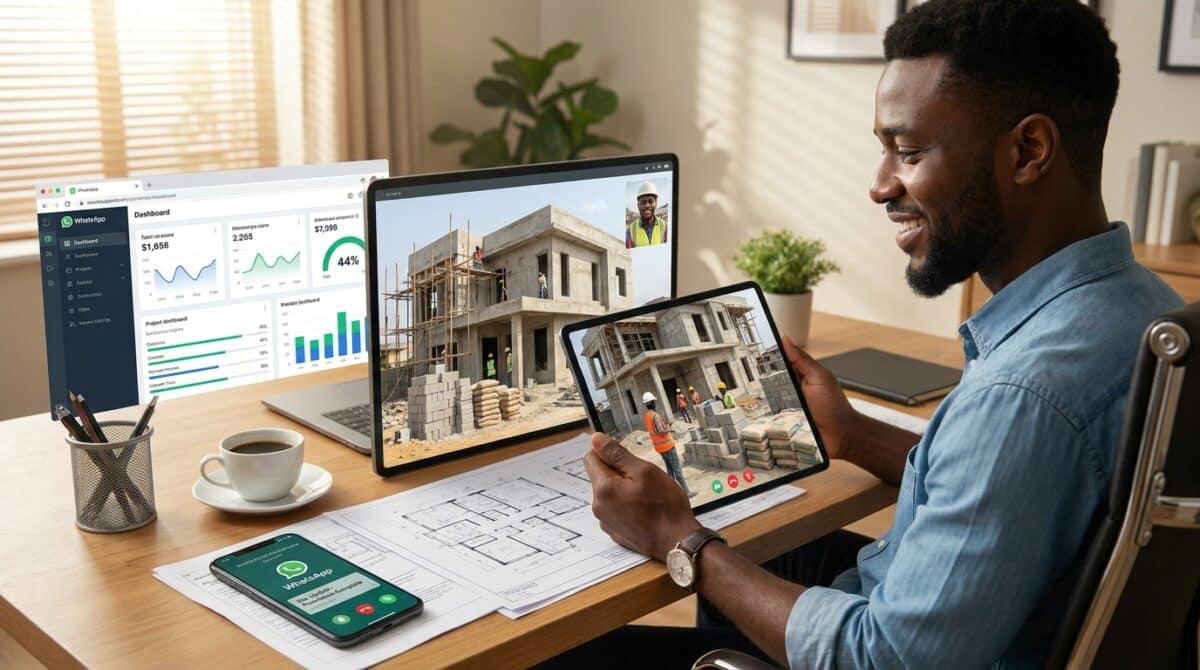
Video calls can be used for virtual inspections, as well. You can use WhatsApp, Zoom or Google Meet to walk through with your contractor. You can ask questions and even check work in progress from your current location.
Make a basic project tracker for the computer, too. It doesn’t matter how simple or complex a job is; a Google Sheet can track progress, payments, materials delivered, pending tasks, and important dates.
As far as payments are concerned, go with bank transfers as much as possible. All payments should be documented. While it might seem easy to conduct cash transactions, it can also lead to confusion and arguments later on.
Have Someone You Trust on Ground
While technology is helpful, there’s no substitute for a good old-fashioned human. You need somebody who can be your eyes and ears.
This may be a professional project manager or an experienced site supervisor. It could be someone in the family who has experience in construction. Someone who can give honest feedback.
Establish their duties right from the start. Determine the frequency of visits to the site and what they should report. Someone that can make decisions on things without needing to speak with you first.
It is also a good idea to have a small emergency fund set aside for on-site emergencies. Construction projects rarely run smoothly. Emergencies come up that, if they aren’t addressed, will have increased costs down the road.
Carefully ensure the quality of materials
The easiest way money is lost in Nigeria’s building projects is due to inadequate building materials.
When you’re not there, it’s even more difficult to notice these problems.
Do not rely on your contractor to do this; build relationships with good suppliers.
Explain in detail what materials are to be used. Define the brands, grades and specifications for various products such as cement, steel reinforcement, roofing material, plumbing fittings and electrical cables.
Ask for photos to be sent and keep a record of the ones that have been approved.
Materials should also be checked and approved by your project manager or site supervisor prior to use on site.
Respect rainy season
A lot of first-time builders don’t realize the impact of the rainy season in Nigeria on their building process.
Heavy rain may hinder the foundation work. It could slow down the roof construction, exterior plastering and some other key construction phases.
If you are considering a project that will take place during the spring (April) and summer (September and October), speak with your contractor before starting to discuss the potential for delays due to weather.
If you make use of this information about the potential interruptions early on, you’ll set realistic expectations and won’t get frustrated later.
Stay Involved Even When You’re Far Away
One of the biggest pitfalls that remote project owners fall into is that they disappear for weeks. Having the mind that everything is fine.
One day they go to the location and find that they have missed some things that they would have liked to have seen before.
But the reality is this: if you’re not there in person, you must be there in spirit!
Have weekly review meetings with the team. Read project reports. Check progress updates. If it’s unclear, ask questions!
Your commitment demonstrates that you’re engaged and that accountability is important.
Fortunately, it is possible to run a building project in Nigeria without living on the premises. It is done successfully by thousands of Nigerians both at home and abroad every year.
The keys are to have the right team, good records, using technology to its best advantage, and communication.
If you get these things right, then your dream home can come together successfully, even from hundreds or thousands of kilometers away.
Still have questions?
Navigating the real estate market can be complex. Head over to the iPropty Q&A hub to get expert answers, or ask your own question today!
Explore the Q&A Hub