
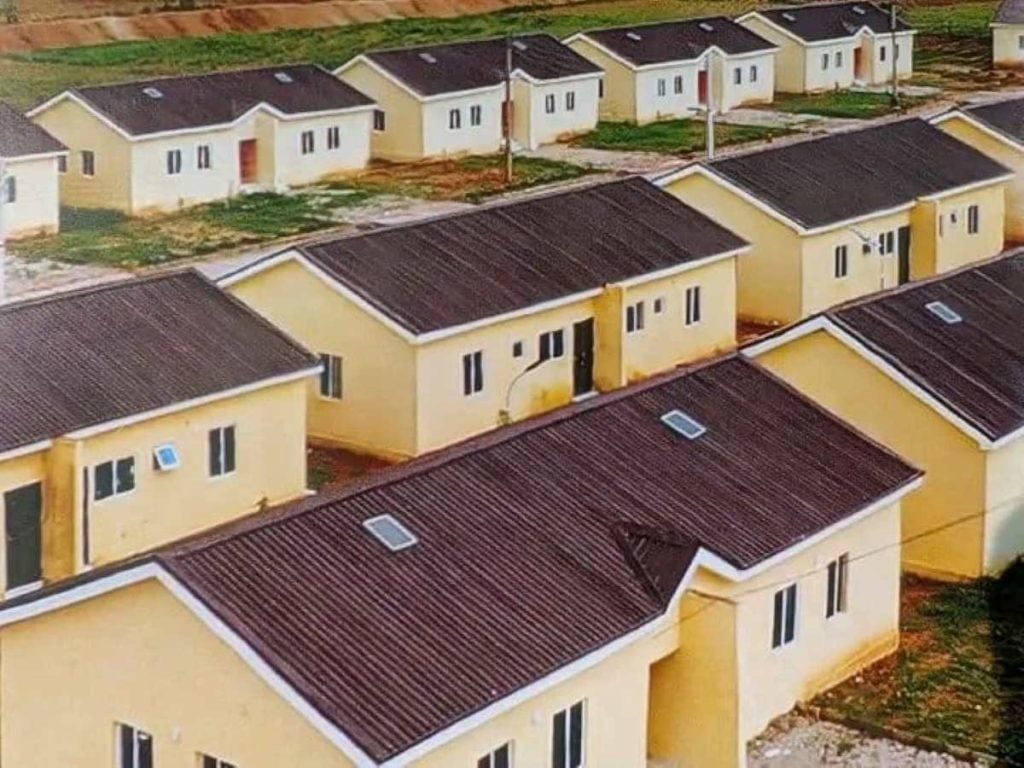
Nigeria has emerged as one of the most attractive real estate markets in West Africa, with strong opportunities across residential and commercial property, according to Panterra Real Estate Group’s 2026 West Africa Real Estate Market Report.
The report, which examines property markets across the region, places Nigeria ahead of other West African markets on overall market attractiveness. Ghana follows Nigeria in the broader assessment.
However, the report draws an important distinction between overall market attractiveness and the specific real estate investment opportunity ranking. On the latter measure, Côte d’Ivoire ranked first, followed by Nigeria, Ghana, Senegal and Cabo Verde.
The findings provide a fresh view of Nigeria’s position in the regional property market. They also highlight the factors investors may need to consider when assessing opportunities across West Africa.
Six factors shape real estate market attractiveness
Panterra assessed the countries using six major pillars.
These include economic activity, real estate investment opportunities, capital market depth, investor protection and legal frameworks, socio-cultural and political conditions, as well as administrative and regulatory burdens.
The economic pillar considers indicators such as gross domestic product, economic growth, GDP per capita, workforce size, inflation and innovation.
Nigeria ranked first in this economic category.
The report also assessed the strength of capital markets. This included stock market liquidity, initial public offerings, mergers and acquisitions, debt and credit markets, access to private capital and the development of Real Estate Investment Trusts, or REITs.
These factors are important because real estate development increasingly depends on access to long-term financing rather than only direct property purchases.
The report also examined investor protection, security, property rights, legal enforcement and regulatory quality.
Cabo Verde ranked first in this area.
Its administrative burden assessment also considered taxation and capital gains, construction permits, property registration, the ease of starting and closing businesses, and foreign exchange controls.
Meanwhile, Côte d’Ivoire ranked first in the socio-cultural and political environment category.
That assessment considered human development indicators, crime, bribery and corruption, as well as political systems.
Nigeria’s economic scale supports property demand
Nigeria’s first-place ranking in the economic pillar is significant for the real estate sector.
A large economy and growing urban population can create demand for housing, offices, retail centres, warehouses, industrial facilities and other property types.
However, economic size alone does not automatically translate into successful real estate investment.
Investors also need access to financing, reliable infrastructure, secure property rights and predictable regulations.
This explains why Panterra used several indicators rather than relying on one economic measure.
The report therefore presents Nigeria’s position within a wider regional investment picture.
Local and Global South capital are changing the market
Speaking about the report, Panterra Real Estate Group’s Chief Investment Officer, Ayo Ibaru, identified currency stability, financing depth, security and partnerships with Global South investors as factors increasingly influencing property performance in West Africa.
According to Ibaru, local developers and investors are playing a larger role in financing the region’s growth.
At the same time, capital from the Gulf region, Turkey and Asia is helping to diversify the investor base beyond traditional Western sources.
This shift could have implications for how large property and infrastructure projects are financed.
It could also create opportunities for developers who can structure projects that attract both domestic and international capital.
Panterra’s findings come as the company expands its activities across principal investing, asset management, market research, digital real estate investment and building materials distribution. The company recently unveiled its 2026 West Africa Real Estate Market Report alongside its Nigeria Construction Market Report and Panterrium, a digital real estate ownership and investment platform.
Lekki corridor strengthens Nigeria’s investment case
Ibaru also pointed to the $25 billion Dangote refinery as an important development supporting the growth of the Lekki Free Trade Zone.
The refinery has contributed to the emergence of the Lekki area as an important industrial corridor.
The development has wider implications for real estate because major industrial investments can generate demand for logistics facilities, warehouses, worker housing, commercial services and supporting infrastructure.
As industrial activity expands, property demand can also move beyond the immediate project location.
Businesses require roads, storage facilities, offices, accommodation and other services to support their operations.
For property investors, this makes infrastructure-led development an important consideration when evaluating emerging locations.
Abidjan-Lagos Corridor could open new opportunities
Ibaru also highlighted the proposed $15.6 billion Abidjan-Lagos Corridor as another major development with potential implications for West African real estate.
The corridor will connect five countries: Côte d’Ivoire, Ghana, Togo, Benin and Nigeria.
The African Development Bank has described the project as a major regional infrastructure initiative. It is expected to connect major economic centres including Abidjan, Accra, Lomé, Cotonou and Lagos. The corridor is also expected to serve an urban population projected to reach 173 million by 2050.
The proposed highway is approximately 1,000 kilometres long and is designed to improve movement of people and goods across the five countries.
For real estate, improved regional connectivity can support the development of industrial zones, logistics parks, commercial centres and residential communities along strategic locations.
It could also strengthen demand around ports and other transport infrastructure.
Infrastructure and logistics remain key
According to Ibaru, despite the risks associated with investing in West Africa, local and Global South capital is already supporting infrastructure development at scale.
He identified industrial zones, port cities and logistics corridors as areas where opportunities could emerge.
This is particularly relevant to Nigeria because property development is closely linked to infrastructure.
A location may have available land, but poor roads, unreliable electricity, weak drainage or limited connectivity can reduce its attractiveness to developers and occupiers.
Conversely, major infrastructure investments can improve accessibility and encourage new commercial and residential activity.
The Abidjan-Lagos project illustrates this relationship. The African Development Bank has described the corridor as a project intended to improve regional trade, reduce transport costs and connect major economic centres and ports.
What the report means for Nigerian real estate
Panterra’s findings point to a Nigerian property market with significant opportunities, but also important considerations for investors.
Nigeria’s large economy, urbanisation, infrastructure projects and growing services sector provide a strong base for property demand.
However, investors still need to examine currency conditions, financing costs, security, regulatory requirements, property rights and infrastructure before committing capital.
The report also shows that Nigeria’s position should not be viewed in isolation.
Other West African markets are developing their own investment advantages. Côte d’Ivoire’s first-place position in the specific real estate investment attractiveness ranking demonstrates that regional competition remains strong.
For Nigeria, sustaining investor interest will therefore depend not only on the size of its property market but also on how effectively infrastructure, financing, regulation and urban development support long-term investment.
As new industrial corridors, transport projects and sources of capital continue to develop, the opportunities identified by Panterra could increasingly extend beyond traditional housing and commercial property into logistics, industrial real estate and infrastructure-linked developments.