
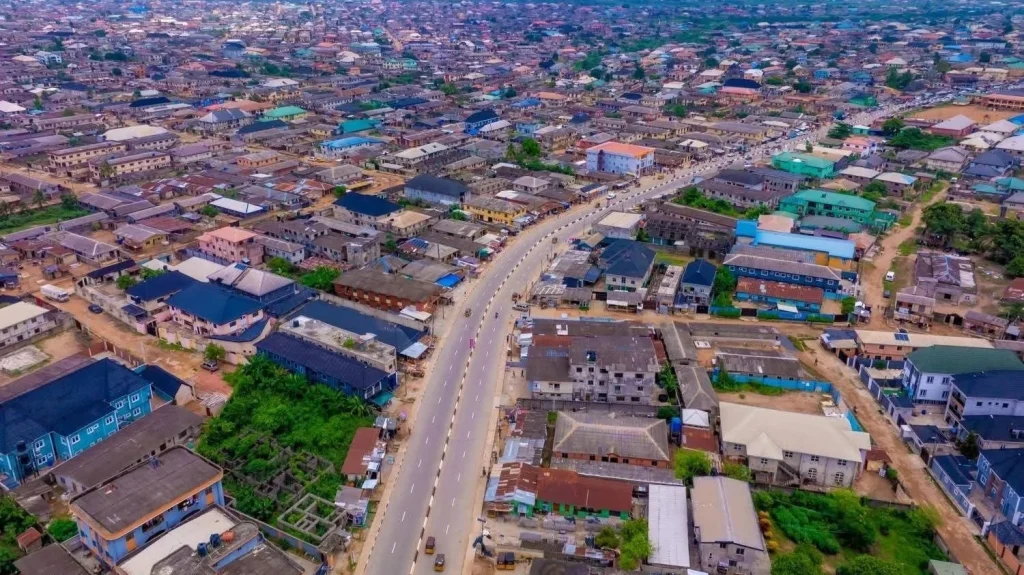
Nigeria’s real estate market underwent significant changes in 2025 as developers, investors and businesses responded to rising costs, higher interest rates and changing economic conditions.
According to the Nigeria Real Estate Report 2026, prepared by estate surveying and valuation firm Ubosi Eleh + Co, the market did not contract during the period. Instead, it went through what the report described as a period of structural adjustment, with property prices, development patterns and investment flows changing across different segments.
The report stated that fiscal reforms, monetary tightening, exchange rate liberalisation and institutional restructuring affected how capital moved through the real estate sector.
These economic changes also influenced property values, construction decisions and the pace of development.
Higher costs reshape property development
The report noted that political and fiscal reforms generally provided the direction for Nigeria’s real estate sector.
The reforms pointed towards stronger revenue mobilisation and greater formalisation of economic activities. At the same time, the 2026 Federal Budget reinforced the government’s focus on infrastructure-led growth.
However, the wider economic environment created significant pressure for property developers.
Higher interest rates increased the cost of borrowing, while currency adjustments raised the cost of construction materials and other imported inputs.
These pressures affected project timelines, with some developments missing their planned delivery dates.
As a result, developers began changing how they approached construction.
According to Ubosi Eleh + Co, some developers adopted phased construction, reduced the size of projects and relied more heavily on equity financing rather than expensive debt.
This adjustment shows how financing conditions can directly affect the supply and design of new housing and other property developments.
Despite these challenges, the report said underlying demand for real estate remained strong.
The continued housing demand was linked to Nigeria’s widening housing deficit, urbanisation and population growth.
Rental housing gains as homeownership becomes harder
One of the clearest effects of higher property costs was the growing importance of rental housing.
As the cost of buying a home increased, affordability challenges pushed more people towards renting.
Population growth and continued urbanisation also kept pressure on residential properties.
The report identified Lagos, Abuja and secondary cities as important areas where residential demand remained strong.
However, rising costs also encouraged demand to spread beyond major urban centres.
Suburban locations such as Ibeju-Lekki, Mowe and satellite towns around Abuja recorded increased attention as people and businesses looked for alternatives to more expensive central locations.
For developers, this shift could make suburban infrastructure increasingly important.
Roads, transport links, drainage, electricity and other basic infrastructure can influence whether these emerging residential corridors can sustain long-term growth.
Diaspora investment supports high-end housing
While affordability remained a major challenge for many Nigerians, the report identified continued strength in the high-end residential market.
It also pointed to regional housing, particularly in the South-East, as a segment that continued to benefit from diaspora investment.
Nigerians living abroad have remained an important source of capital for property development and home purchases.
This has helped support demand in selected markets even as higher construction and financing costs affected other parts of the sector.
However, the report’s findings show that the residential market is not moving in one direction.
Demand is being shaped by income levels, location, financing conditions and the ability of buyers to absorb rising property prices.
Commercial property market focuses on efficiency
Nigeria’s commercial real estate market also adjusted to the higher-cost environment.
According to the report, businesses generally reduced their office space requirements and placed greater emphasis on efficiency.
Companies also showed stronger preference for Grade A office properties.
Prime locations in Lagos and Abuja continued to maintain occupancy, showing that demand remained concentrated around well-located and higher-quality commercial assets.
However, the secondary office market experienced softer conditions.
Flexible workspaces also expanded as businesses looked for ways to manage higher operating costs while maintaining access to professional working environments.
This shift suggests that office developers may need to pay greater attention to the quality, location and efficiency of commercial buildings rather than relying only on increasing office supply.
Industrial and logistics property lead the market
The industrial and logistics segment emerged as the strongest-performing property category in the report.
E-commerce growth, changes in supply chains and infrastructure investment increased demand for warehouses and industrial parks.
The report identified important industrial and logistics corridors across Lagos, Ogun and port-linked areas.
These locations recorded strong occupancy and rental growth, according to the report.
Industrial properties also delivered the most stable returns among the asset classes covered.
Ubosi Eleh + Co attributed this performance to limited supply and clearer demand visibility.
The growth of e-commerce is particularly relevant because online businesses require physical infrastructure to store, process and distribute goods.
As supply chains continue to change, warehouses and strategically located industrial facilities can therefore become increasingly important to businesses.
Retail property remains resilient but selective
Retail real estate remained resilient, although the market became more selective.
Consumer pressure meant that retail operators and property owners had to pay closer attention to how shopping spaces performed.
The report said formal retail centres responded through tenant-mix optimisation and experiential formats.
In practical terms, this means property owners are becoming more focused on the types of businesses operating within their facilities and the experiences they offer customers.
Mixed-use developments also gained traction.
These projects combine different property uses, including retail, residential and hospitality facilities, within the same development.
The approach can help developers improve asset performance by creating multiple sources of demand and income.
Hospitality records strong pricing recovery
Nigeria’s hospitality sector also showed signs of recovery.
The report said average daily rates more than doubled in key markets, supported by limited hotel supply and rising business travel.
However, strong room pricing did not necessarily translate into rapid development.
Project execution remained a major challenge.
More than 60 per cent of planned hotel developments were still at early stages, according to the report.
Financing difficulties and rising construction costs were identified as factors slowing down hotel projects.
This highlights a wider challenge across Nigeria’s real estate sector.
Strong demand does not always result in immediate supply when developers face expensive financing, high construction costs and infrastructure constraints.
Infrastructure remains central to property value
The Nigeria Real Estate Report 2026 ultimately presents a market adjusting rather than collapsing.
Higher interest rates, exchange rate changes, construction costs and fiscal reforms have changed how developers finance and deliver projects.
Developers are responding through smaller projects, phased construction and greater use of equity.
At the same time, demand remains supported by population growth, urbanisation and the country’s housing deficit.
The performance of industrial and logistics property also demonstrates the importance of infrastructure and economic activity to real estate.
From residential suburbs to industrial corridors, property values increasingly depend on access, connectivity and supporting infrastructure.
For investors and developers, the changing market means that location, financing, construction costs and demand visibility remain critical considerations.
The report shows that Nigeria’s real estate sector is continuing to evolve as market participants adjust to a higher-cost economic environment.