
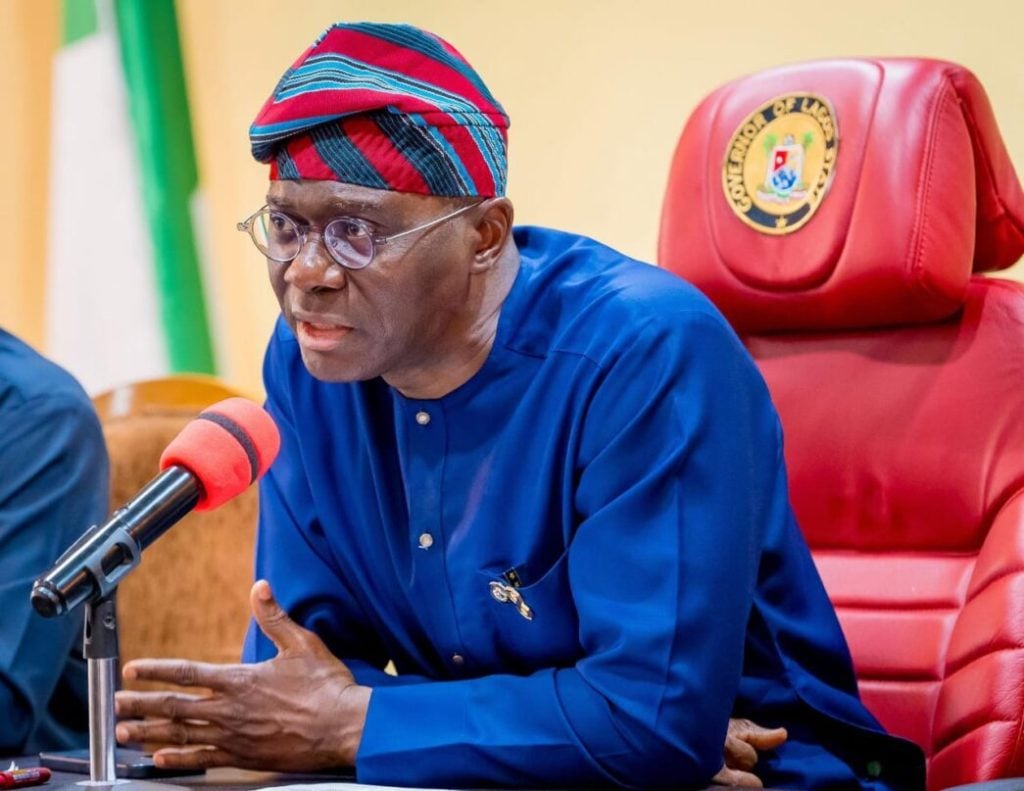
Lagos State generated ₦1.77 trillion in internally generated revenue (IGR) in 2025, accounting for 34.4% of the ₦5.15 trillion generated by Nigeria’s 36 states and the Federal Capital Territory (FCT).
The figure places Lagos well ahead of other sub-national governments and highlights the state’s strong revenue base as demand for housing, transport, infrastructure and other urban services continues to grow.
Data from the National Bureau of Statistics (NBS) showed that combined IGR across the states and FCT rose by 40.93%. It increased from ₦3.65 trillion in 2024 to ₦5.15 trillion in 2025.
The figures were compiled by the Joint Revenue Board using official records and submissions from state internal revenue boards. However, the NBS noted that the figures remain subject to reconciliation and possible updates by the respective revenue authorities.
Lagos Leads Nigeria’s States in IGR
Lagos recorded ₦1.769 trillion in IGR during 2025.
Tax revenue contributed ₦1.48 trillion, while ministries, departments and agencies (MDAs) generated ₦292.64 billion.
Rivers State ranked next with ₦428.42 billion, followed by Enugu State with ₦406.77 billion. The FCT generated ₦356.34 billion, while Ogun State recorded ₦252.36 billion.
Lagos’ revenue was therefore more than four times the amount generated by Rivers State.
The size of Lagos’ contribution also shows the concentration of economic activity within the country’s largest commercial hub. The state alone accounted for more than one-third of the combined IGR generated by all states and the FCT.
However, the strong revenue performance comes as Lagos faces significant pressure to expand housing and urban infrastructure.
Lagos Faces Significant Housing Investment Needs
The state’s strong revenue position exists alongside a major housing supply challenge.
Research by GTI Investment Group estimated that Lagos requires about ₦6 trillion in fresh capital every year to keep pace with its housing needs.
The research also identified a gap between the type of homes available and the homes most needed by residents. Lower-priced housing represents a large share of estimated demand, while a relatively small portion of available housing falls within those price ranges.
This creates a clear difference between the state’s revenue capacity and the amount of capital required to address its housing needs.
Although Lagos generates substantially more IGR than other states, its annual revenue cannot independently provide all the funding required for large-scale housing development.
Housing delivery involves several major costs, including land acquisition, construction, infrastructure, mortgage finance and private-sector development.
Public Revenue Alone Cannot Close the Housing Gap
Lagos’ ₦1.77 trillion IGR gives the state greater fiscal capacity to fund infrastructure and support urban development.
However, housing delivery requires investment from several sources.
Government spending can support roads, drainage, land administration, public housing and other infrastructure. At the same time, private developers, institutional investors and housing-finance providers are needed to increase the volume of homes available in the market.
GTI’s estimated ₦6 trillion annual capital requirement highlights the scale of this challenge.
For the property market, the figures point to the importance of combining public spending with private investment and other forms of long-term capital.
Developers also need access to land and financing at costs that allow them to build homes that middle- and lower-income households can afford.
Infrastructure Remains Important to Property Development
Lagos’ revenue performance also has implications beyond housing construction.
Infrastructure plays a major role in determining where residential, commercial and industrial development can take place.
Roads, rail transport, drainage systems, water supply, electricity and other urban services can improve access to previously underserved areas.
Research by GTI Investment Group found that transport connectivity is already influencing Lagos’ property market.
According to the research, properties located around rail infrastructure recorded higher rental yields in some areas and could also attract value premiums compared with properties in less-connected locations.
This shows how infrastructure investment can affect both urban mobility and property development.
Improved connectivity can make emerging areas more attractive to residents, businesses, developers and investors. It can also encourage development along new transport corridors.
Tax Revenue Drives Lagos’ IGR
The composition of Lagos’ IGR is another important part of the state’s fiscal position.
Of the ₦1.77 trillion generated in 2025, ₦1.48 trillion came from taxes. MDAs contributed ₦292.64 billion.
The structure differs from some other states, including Enugu, where MDA-generated revenue represented a larger share of total IGR.
Across Nigeria’s states and the FCT, tax revenue amounted to ₦3.79 trillion in 2025.
That represented 73.64% of the total ₦5.15 trillion generated during the year.
MDA-generated revenue contributed ₦1.36 trillion.
For Lagos, the large share of tax revenue reflects the size of its formal economy and taxable population and businesses.
Revenue Capacity Could Support Urban Infrastructure
A strong IGR base gives a state more room to plan and finance infrastructure without depending entirely on allocations from the Federal Government.
This is particularly important for Lagos because of the scale of its population, economic activity and urban development pressures.
The state continues to deal with growing housing demand, transport congestion, infrastructure needs and pressure on existing urban systems.
However, higher revenue does not automatically lead to better housing or infrastructure delivery.
The outcome depends on how funds are allocated, the quality of project execution and whether government investment succeeds in attracting additional private capital.
For Lagos, the challenge is therefore not only generating revenue but also converting fiscal capacity into infrastructure and development that meets the needs of a growing population.
Private Investment Remains Important
Lagos’ IGR figures further highlight the role of the private sector in closing the state’s housing gap.
Previous research reported by the Nigeria Housing Market showed that lower-priced homes represent a significant share of estimated housing demand in Lagos, while available supply is more concentrated in higher price categories.
Addressing this imbalance requires developers to overcome the high cost of land, construction and financing.
Government revenue can help create the conditions for development through infrastructure, land administration and public housing programmes.
However, private developers and institutional investors remain important to expanding the overall housing supply.
What the Revenue Means for Lagos’ Property Market
Lagos’ ₦1.77 trillion IGR gives the state considerable fiscal capacity.
That capacity could support infrastructure projects that open up new development areas and improve the investment environment.
Better roads, mass transit, drainage, utilities and other infrastructure can make less-accessible locations more suitable for residential, commercial and industrial development.
For property developers and investors, the key issue is therefore how the state’s revenue strength translates into actual infrastructure and development opportunities.
The 2025 figures show that Lagos has a significantly larger internally generated revenue base than other Nigerian states.
At the same time, the state’s housing and infrastructure requirements remain substantial.
The estimated ₦6 trillion annual capital requirement for housing also shows that public revenue alone cannot meet the scale of investment required.
As Lagos continues to expand, government revenue will remain important for infrastructure and housing programmes. Private developers, institutional investors and housing-finance providers will also remain central to increasing housing supply.
The state’s ₦1.77 trillion IGR therefore represents both fiscal capacity and a measure of the scale of the development challenge facing Lagos.
The focus now extends beyond how much revenue the state generates to how effectively that revenue can support housing, infrastructure and other investments required by its growing urban economy.