

Demolition Operations Have Commenced
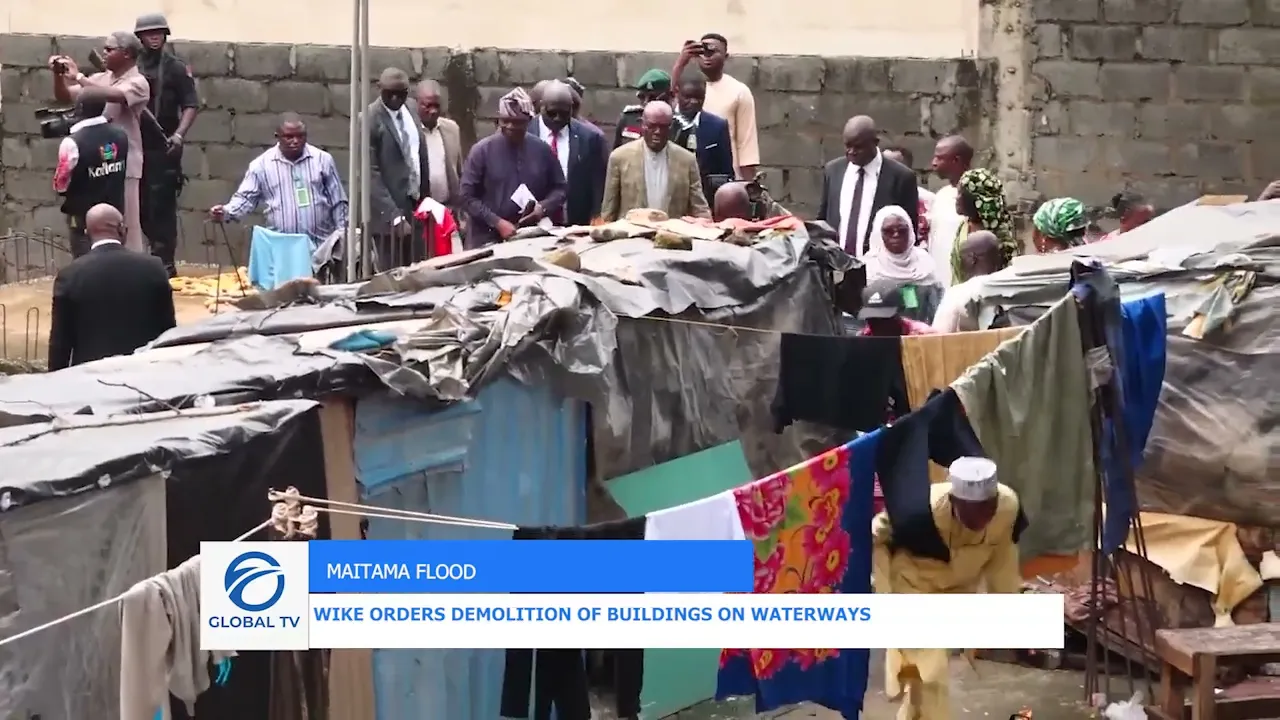
The Federal Capital Territory Administration has commenced the demolition of buildings and other structures erected along designated waterways in Abuja, starting from Maitama.
The FCT Minister, Nyesom Wike, gave the directive for immediate enforcement on Tuesday, August 18, following an inspection of areas that have been experiencing serious flooding since Saturday’s rains. The demolition will go on regardless of whether or not the properties belong to influential persons, according to Wike, who instructed the Department of Development Control to demolish structures that block the designated waterways.
According to the minister, some of the affected properties belong to senators and other wealthy Nigerians. Wike stated that political influence should not play any role when it comes to properties that block the drainage plans in Abuja.
And this goes beyond being another demolition news story from Abuja because what this means to property owners and prospective purchasers is that a problem may lie dormant even amidst an expensive property and complete title documents.
What Exactly Is Wike Demolishing in Abuja?
It is not true that the FCT Administration is going to pull down every building in the areas of Maitama, Asokoro or any other district where flooding is taking place.
The current operation is aimed at buildings erected on and blocking drainage water channels and other restricted corridors. According to Wike, the operation has been carried out as a result of the construction of buildings that hinder the passage of stormwater and cause flooding.
This clarification is important.
There is no need for a property owner to worry about having a structure pulled down just because their land lies near a stream, drainage channel or low-lying area. The real issue is the occupation or obstruction of a corridor that has been designated by the planning authority.
According to guidelines issued by the FCTA, certain encroachments on utility corridors, road and railway reservations, and other special open spaces are considered land-use violations that may require demolition, while other categories may not need any such drastic action.
Why Maitama Is Relevant
The location of the first major enforcement operation makes the story especially relevant for the property market in Abuja.
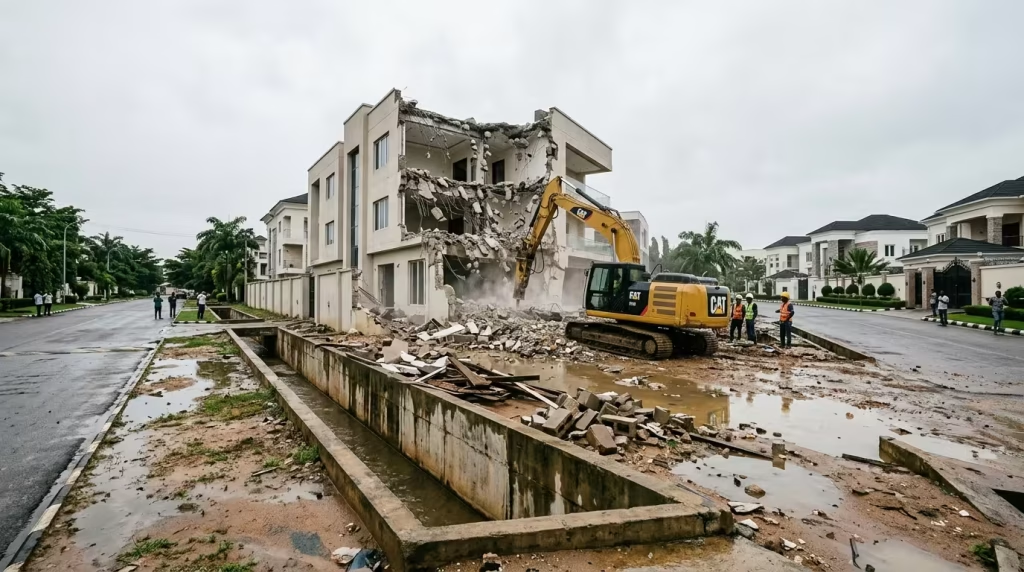
Maitama is a residential area in Abuja that enjoys a lot of prestige. But the current exercise has demonstrated that the location of a building or the prestige associated with it will not necessarily override planning restrictions.
This doesn’t imply that all luxurious buildings in Maitama should be demolished. What it implies is that the FCT Administration has shown itself ready to enforce planning regulations even when the affected properties belong to some influential individuals.
Also, Wike has put the operation into the context of a larger effort to reestablish compliance with the planning regulations of Abuja. According to the website of the FCTA, restoration of the Abuja Master Plan and demolition of illegal buildings are among its priorities.
So, this development sends a signal to the property market about the fact that prestige won’t substitute for compliance.
A good location may increase the value of a property, but it won’t cancel the planning restriction on the land.
A C-of-O Is Just Part of Due Diligence
Among the clear lessons to be learned from the present enforcement drive is the importance of looking beyond the C-of-O.
While it is still very significant in any property transaction, buyers must be wary of considering the C-of-O as the sole instrument that will determine whether a property is fit for purchase.
The due diligence on any property must also include determining the approved use, development stage and building approvals of the property, and their consistency with the applicable planning controls.
This is even more important when a buyer acquires a developed property. There will be instances where the buyer inherits a developed and occupied structure that has some unresolved planning and development-control issues.
The existing FCTA land administration system provides for instances where violations of land-use controls might necessitate demolition.
It follows that a buyer must seek answers to more meaningful questions than “Is there a C-of-O for this property?”
Such a question should be:
“Are the title, approved use, building approvals and development of the property consistent with its current status?”
What This Means for Abuja Property Buyers
This is an opportunity for buyers to beef up their due diligence, not an excuse to shun properties located in developed areas.
Prior to any purchase, buyers need to ensure that they have carried out proper due diligence on the property by checking its title and ensuring that the person whose name is written on the title is indeed the registered allottee or owner. This includes confirming the approved land use, building approvals, as well as the extent to which the plot might be encroaching on any restricted corridor.
Flood Risk Deserves Special Attention
A buyer needs to examine the drainage environment of the plot, assess how water drains from the plot during rainfall and establish whether there is any history of flooding at the site. It is possible to find a very beautiful property that may actually pose physical and regulatory risks to the owner.
Wherever necessary, buyers should seek expert advice prior to making a significant payment.
What It Means for Existing Property Owners
There is no need for existing property owners to feel alarmed if they happen to own a property in Maitama or in other neighbourhoods hit by recent floods.
Rather, owners ought to identify exactly how their plot stands in relation to waterways, drainage channels and other restricted zones.
They should also look at their planning and construction documents and sort out any problems in these documents if possible.
Property owners whose plots are near waterways are advised to take special heed of notices issued by the FCT Administration and development-control agencies. They are not supposed to depend only on the claims made by previous property owners, agents and middlemen.
Property owners should also ensure that drainage channels around their development sites remain unobstructed.
It is clear from current enforcement that the FCT Administration regards obstruction of waterways as a development-control problem. Property owners who are in doubt concerning their property’s condition should resolve such doubts before regulatory inspections make the matter worse for them.
What It Means for Abuja Landlords and Tenants
There are certain properties in Abuja that have had a history of flooding or are located near drainage systems and waterways that need to be assessed by the respective landlords.
The first question here is not whether every one of these properties needs to be torn down. Rather, the question is whether or not the property meets the relevant requirements for planning and development.
Both landlords and tenants need to ensure that the property documentation is easily accessible and that the proper authorities can send notices at any time.
The second question here is whether a tenant can assume anything from the demolition process solely based on location. The fact that the tenant lives in Maitama, Asokoro or any other relevant area does not necessarily mean that the tenant will be evicted by virtue of the fact that the FCTA is starting to tear down buildings along the waterways.
However, tenants still need to consider the notices that concern their particular property.
What Could Happen to Abuja Property Values?
It is too early to conclude that the demolition exercise will cause property prices in Maitama, Asokoro or any other premium zone to decline.
There are no market facts currently supporting such a trend.
More realistic is the idea of shifting buyer perception about regulatory risk.
Properties with a good title history, planned development, appropriate land use and reduced flood risk may become easier to distinguish from properties with unclear regulatory standing. Buyers will also become more diligent in their due diligence prior to making investments.
This might gradually raise the importance of regulatory due diligence in property valuation.
However, the extent and longevity of enforcement, the number of affected properties and the consistency of regulatory policy by the FCT Administration will determine the effect.
At present, it is still too early to speak of market winners and losers in Abuja.
What the current market exercise has demonstrated is a much more significant thing: regulatory compliance does matter in assessing property risk, irrespective of property location and cost.
The Bigger Abuja Property Lesson
The demolition exercise in Maitama shows a flaw in the property-buying process in Nigeria.
Buyers consider such issues as location, documents, structure and cost. These are important considerations but do not exhaust everything one should know about the property in question.
Each property is a part of the planning scheme.
This planning scheme dictates what will fit there, where development is allowed and what must be left to provide infrastructure, drainage, electricity, roads and other public services.
According to the FCTA, the Abuja Master Plan provides the basis for the planned development of the city, while its engineering department adds that the Federal Capital City was phased and districted according to this plan.
The ongoing enforcement of the laws proves how dangerous it can be to ignore the planning context of the property one buys.
For investors, this means not only avoiding the rivers but understanding the planning context of the property.
Conclusion on the Wike Abuja Demolition
The latest round of demolitions in Abuja should make property buyers think differently about conducting due diligence.
A property can be located in an attractive area, have an attractive structure, a strong market value and a set of important title documents and yet be risky for a reason that will not show up in any casual assessment.
So, the most important question here is not just:
“How valuable is this property?”
It’s actually:
“Why could this property become valueless?”
Flood susceptibility, planning problems, development-control issues and encroachments could all determine that.
What the Maitama action means more broadly is that the FCT Administration will make sure development-control regulations are enforced even if the property belongs to rich and powerful individuals.
That doesn’t mean all properties in Abuja are now risky. It means that verification is more valuable than ever.
As far as buyers, investors and real estate agents are concerned, their smartest reaction to the ongoing demolition wave isn’t fear. It’s information.
Still have questions?
Navigating the real estate market can be complex. Head over to the iPropty Q&A hub to get expert answers, or ask your own question today!
Explore the Q&A Hub