

Ever come into your bedroom on a very hot afternoon and thought, “Too bad!” It’s 2 pm. The sun is blazing. The ceiling fan is at full speed. The AC is either burning fuel like it’s never going to end, waiting for the power to come back, or not cooling enough. The room, however, still has the feel of an oven somehow.
Several Nigerians think of more investment in an AC, fan, and generator. In many instances, however, the actual problem is one that does not involve the cooling equipment. It’s how heat gets into and stays in the house.
The good news is that you don’t have to go out of your budget to cool your house down. There are a few clever strategies to reduce the temperature indoors and make a little less use of fans and air conditioners.
It’s all about learning to work with the weather and not against it.
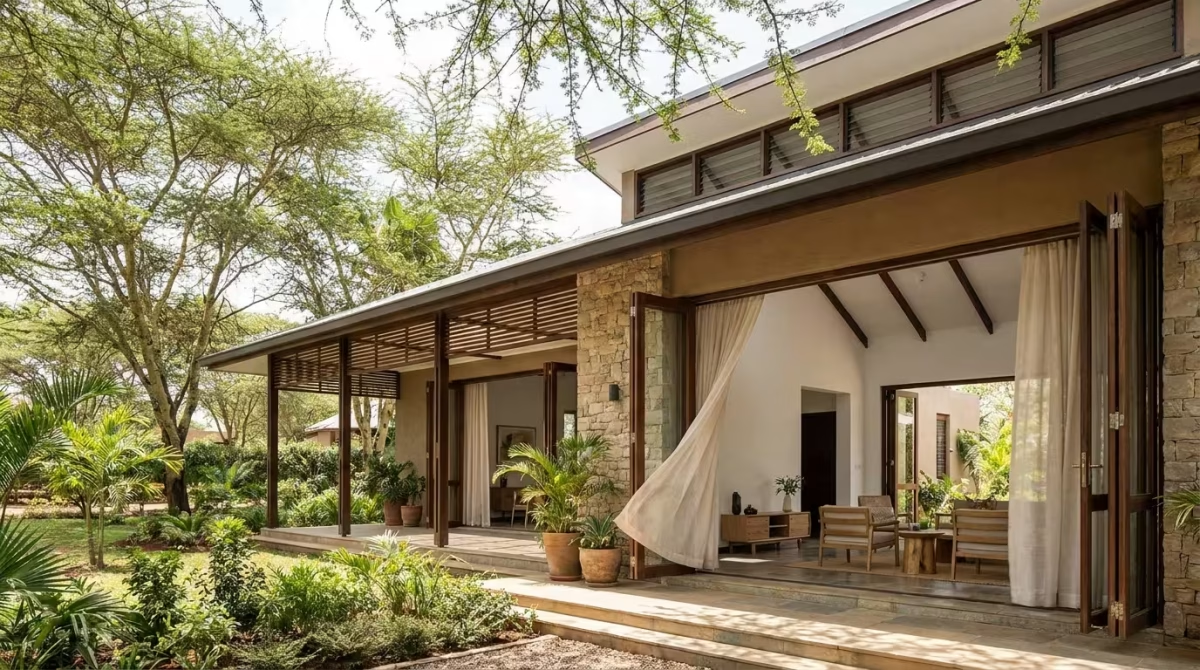
1) Understand where the heat is generated
If you’re looking for solutions, it’s first important to understand the ways in which most homes gain heat. The first source is solar radiation. This occurs when direct sunlight shines on windows. It warms furniture, walls, floors, curtains and other surfaces within the home.
Another heat source is heat conduction. It is particularly frequently seen in houses that are covered with metal roofing sheets. The roof gets a lot of heat from the sun in the day. This is not released immediately but slowly released over hours into the building. That’s why many homes are still very warm even after dark.
The other third source is convection. This is when hot outdoor air gets into the house through doors, windows, and openings and flows around the house. This will help you to realize that there are 3 sources of heat. After you understand this, effective ventilation doesn’t just mean opening windows. Let me show you how to remove this heat and how to keep the house cool.
2) Use the morning and evening flush technique.
This is one of the easiest ways to cool, but it seems to be the least known. People leave windows open slightly throughout the day. While this seems logical, it often allows hot afternoon air to enter and warm up the house even more. A “flush” is a better option.
Flush is best practiced in the early morning hours (5am to 7am), when the outside temperature is still fairly cool. Open windows and doors on opposite sides of the house as much as possible. Repeat this after sunset, ideally from 7pm onwards, when the temperature starts to fall. What is not adviceable is to keep them open for hours. Rather, develop a powerful air blast for five to 10 minutes.
This force of air blows away all trapped hot air and brings in cooler air from the outdoors. It is effective, especially during the Harmattan. Also in the northern cities like Kano, Kaduna, Bauchi and Jos, where it is much cooler at night. The morning flush typically works best for coastal cities. Cities such as Lagos, Port Harcourt, Uyo and Calabar due to the high humidity during the evening.
3) Create Proper Cross-Ventilation
There were many houses in Nigeria constructed without keeping in mind air flow. Fortunately, there are solutions to improve building ventilation in existing buildings. Cross-ventilation vents in from one side of the house and out from another side. This provides a natural circulation that continually extracts heat from the indoors.
In order to do this, open windows or doors in different directions. For instance, if the sitting room window is facing west and the other window is facing east. It is best to open both windows to produce a through-breeze, and air will flow across the sitting room.
Also, leave internal doors open as far as possible. This will help to circulate fresh air throughout the house and not just be trapped in one room.
One of the issues that apartment dwellers may encounter is that many of the modern apartment designs do not have a good flow of air. Setting up a standing fan against an open window, pointing it outwards, can help in these cases.
The fan operates differently from a fan that blows air into the room. It removes the indoor air from the room. It then forms a slight vacuum inside, which causes fresh air to enter other openings. This is a quick and easy tip, one many homeowners don’t know about.
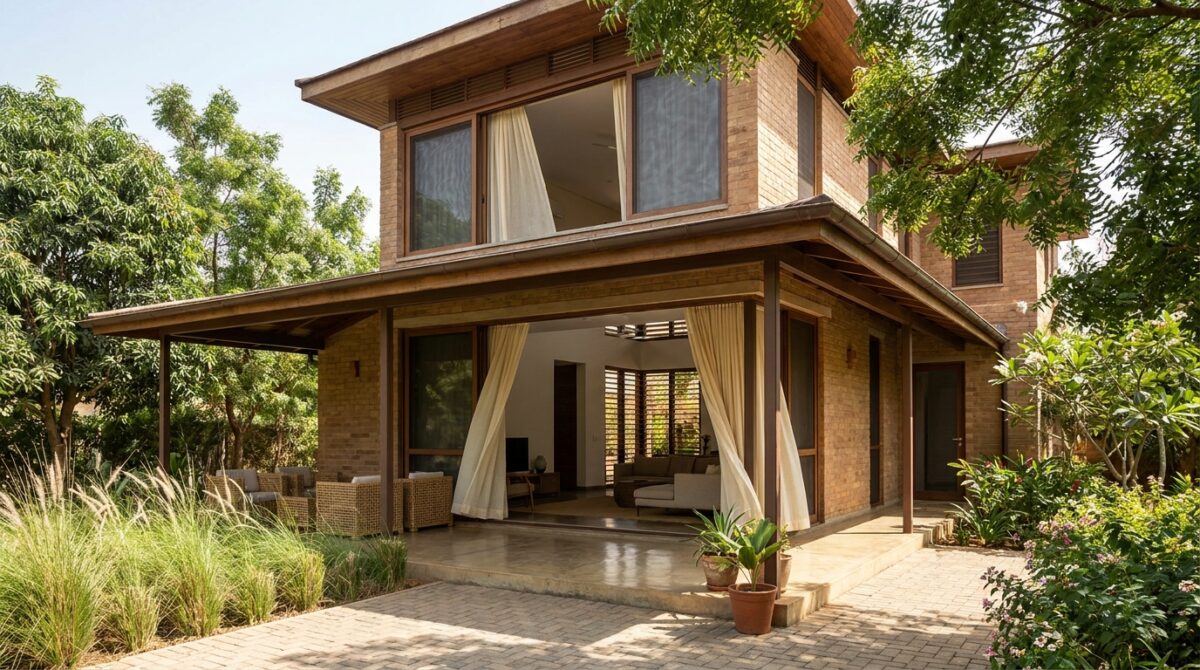
4) Don’t neglect your exhaust fans
Exhaust fans are one of the less-seen cooling devices in homes within Nigeria. Most people use them in the kitchen or bathrooms but don’t use them regularly. That is a mistake.
If you have one in your home, use it whenever you are cooking, particularly when frying, boiling or preparing large meals. The heat and moisture created by cooking are surprisingly high. If the air is not circulated, the heat conducts to other rooms and raises the indoor temperature.
The bathroom exhaust fans are also essential. Moisture will remain in the air for a considerable period after showering. This occurs especially in humid cities. Places like Lagos, Port Harcourt, Calabar, and Warri. The bathroom fan should be left on to help circulate air in the room. And to also dry out the room for about 15 to 20 minutes after bath time, or while it is being used.
Drier air creates less humidity and hence less risk of mold growth on ceilings and walls. Often, these compact exhaust fans work much better than large fans to cool an entire room and to dry out the air.
5) Cool the Roof to Cool the House
Most of the houses constructed in Nigeria have the largest contribution to the heat within their interior from the roof. During the day metal roofing sheets will absorb a lot of thermal energy from the sun. The roof will be a large heat storage system over the heads of the living spaces as temperatures rise.
The usefulness of the roof’s heat reduction will be great in improving the comfort of the building. The alternatives are to use other roofing sheets such as Gerrad products and others. Also, to apply reflective roofing paint, which reflects the sun’s heat and does not absorb it.
One alternative is to underlay the roof with aluminum foil insulation. This forms a barrier that helps to retard the transfer of heat down into the house. Ventilation through the roof vents and ventilated ridge caps can be another good way to help. It allows hot air that becomes trapped in the ceiling space to exit the home before it reaches the living areas.
These solutions are ideal for bungalows and houses that have ample roof space. The best thing is that you can not necessarily renovate the whole roof. Insulation, even partial, can result in significant improvements.
6) Prevent the heat from entering the house
One of the best cooling solutions is to keep the heat out of the home altogether. If sunlight is allowed to penetrate a window and heat up furniture, floors, and walls, getting rid of the heat is much more difficult.
That’s where blackout curtains, thermal blinds, and solar control window film can be a great help. Be sure to pay special attention to windows on the west side, since they are hit by heavy afternoon sun.
These windows have the ability to lower indoor temperatures a lot if they are left covered from 11am to 4pm. This is not sealing up your house 100%. It’s just about preventing the hottest heat in the heat of the day.
Outside shade will help, too. These all interfere with the amount of sunshine that reaches your building. Trees, shrubs, climbing plants, verandas, overhangs and compound walls are all factors that will lessen the amount of direct sunlight that reaches your building.
This is an architectural concept that was not new to the people of Nigeria even before the advent of modern air conditioning technology. In many old houses shade was a natural part of the design, and they were cooler than other houses.
Conclusion
None of these strategies require you to abandon your air conditioner. It doesn’t stop you from using fans altogether. The goal is to reduce the amount of work those appliances need to do.
A home that uses morning and evening air flushes encourages cross-ventilation. An operation that exhausts fans properly, minimizes roof heat, and blocks excessive sunlight will naturally stay cooler throughout the day.
That means lower electricity bills, reduced fuel consumption, less strain on cooling equipment, and a more comfortable living environment.
In a country where power supply remains inconsistent, fuel costs continue to rise, and temperatures are becoming increasingly difficult to ignore, smarter ventilation isn’t just a comfort upgrade. It’s one of the most practical investments you can make in your home.
Still have questions?
Navigating the real estate market can be complex. Head over to the iPropty Q&A hub to get expert answers, or ask your own question today!
Explore the Q&A Hub