
There is increasing public concern in Abuja about the redevelopment of Jabi Lake Recreational Park. Transparency is what residents, civil society groups, environmental groups, and informal economy operators are asking for now with regard to the Federal Capital Territory Administration (FCTA). They are calling for a halt to redevelopment until certain issues are resolved. These concerns are public involvement, environmental protection, and accountability during the project.
The coalition holds a peaceful protest at the park to express its demands. The protesters ask the FCTA to release the Memorandum of Understanding (MoU) between the private developers immediately. They say the deal ought to be accessible to the general public. They say that residents should be made aware of the scope and implementation plan of the project. They also seek clarity on the desired future of one of the most visited public recreation spaces in Abuja.
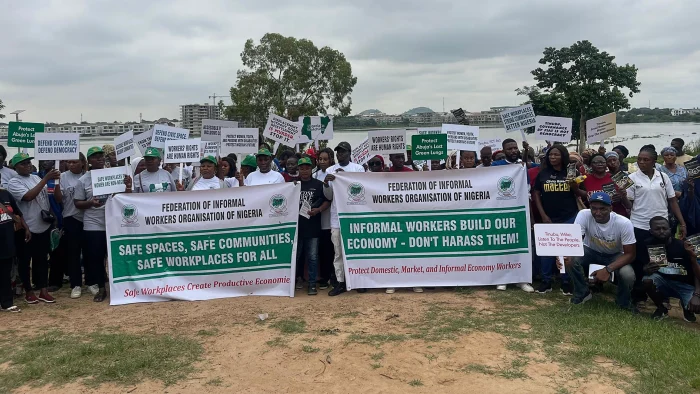
The protesters claim that they are not against redevelopment per se. Instead, they have complained about what they say is too little public consultation prior to construction. It is alleged that the residents, business owners, organizers, and stakeholders were not involved in key discussions. The park is a source of recreation and income for many people. They think that redevelopment should be for all parties concerned.
The coalition said transparency engenders trust between the public and the government. They state that it is through public engagement that development outcomes are reinforced. They also feel it’s important to communicate openly, as this will help to avoid needless conflict during large-scale infrastructure projects. More accountability will lead to broader community buy-in for redevelopment, say protest leaders.
Jabi Lake Recreational Park is one of Abuja’s top recreational parks, having been the preferred park for recreation for nearly two decades. It is visited by thousands of tourists all year round. The park is also the home of some important commercial activities. It is home to restaurants, food vendors, photographers, artisans, boat operators, entertainers, and event organizers. The park also attracts visitors to numerous informal businesses.
Many of these businesses reportedly are interrupted when redevelopment begins. Owners of businesses report they have lost a lot of customers. Due to limited access, some operators have shorter hours. Some worry about permanent displacement if enough protection measures are not put in place. The coalition says redevelopment shouldn’t compromise ongoing living.
As the demonstration continues, protesters request that the FCTA conduct an independent EIA before any additional construction work is allowed to be undertaken. They demand the results also be made public for examination. The coalition says transparency will be vital to a project of this scale. They say more work should not be done until independent experts determine environmental risks.

The proposed EIA would consider several key issues. The lake system, biodiversity, surrounding communities, public infrastructure, drainage systems, and recreation facilities are among these. Protestors feel that the results would inform planning decisions. They also believe that environmental sustainability should be a key part of the redevelopment process all along the way.
Jabi Lake is one of the most valuable public open spaces in Abuja. It also plays a significant role in the city’s environment. Environmentalists say unwise planning may harm the fragile waterfront ecosystems. Their mission is to ensure that redevelopment is responsible and that the environment and recreational value are conserved.
Another significant demand is related to enterprises impacted by redevelopment. Protesters are seeking a fair payout for those who have been displaced. They also ask for practical assistance in relocation if businesses are not able to stay in the project area. The coalition said that many of the business owners have invested years developing businesses around the park that are sustainable. Redevelopment should therefore have the least negative economic impact on those affected.
The leaders of the protest say that local businesses play a key role in making the area a successful business district. They offer jobs and contribute to tourism and hospitality. The coalition thinks that these contributions should be acknowledged in redevelopment planning. Safeguarding existing companies should stay a key government priority, they say.
Another significant concern is public access following the completion of the project. Protesters fear that the commercialization of the waterfront could take over the area. They are concerned that redevelopment will have a gradual effect on access to the recreational facility, which is free to the public. The coalition claims that the park has always been open to the residents, regardless of their income level or social class.
The demonstrations ask the government to keep the park open to the public. They underpin state-of-the-art facilities and infrastructure. They do not, however, object to excessive commercialization, which is restrictive of access. They have stated that redevelopment should improve recreational experiences, rather than be a destination for affluent users.
The controversy comes on the heels of the swift urban renewal projects that are taking place in Abuja under the FCTA. The administration is still spending significant money on roads, transportation facilities, drainage, landscaping, and public facilities. The investments are to make Nigeria’s capital city modern. They also want to enhance urban mobility and develop attractive domestic and foreign investment.
Better infrastructure boosts the competitiveness of Abuja, the government believes. Improved transportation facilities stimulate commerce and economic development. Enhanced public spaces also enhance residents’ quality of life. These are likely to contribute to sustained city growth.
Despite all these advantages, stakeholders are increasingly claiming that successful urban regeneration goes beyond the physical construction. Balanced development strategies needed for modern cities. Environmental sustainability, public participation, social inclusion, and transparent governance should be upheld in the support of infrastructure. All these elements are key to the success of projects in the long run, according to urban planners.
Multiple groups are usually involved in large redevelopment projects. There are various interests served by residents, businesses, investors, tourists, environmental organizations, and government agencies. Conflict avoidance is achieved through effective consultation before construction works commence. Also, it helps in providing a platform for collective decision-making in the process of execution of the project.
Greater stakeholder involvement is recommended for redevelopment projects, as more and more urban planning professionals have come to recognize. The earlier the consultation, the better the acceptance of the project. This also helps to minimize the chances of misunderstanding between government and affected communities. Communication promotes trust and facilitates sustainable development of urban areas.
The Jabi Lake redevelopment has an investment value from a real estate point of view. Jabi is still one of the highlights of residential and business areas in Abuja today. It remains an attractive investment destination thanks to its waterfront position, hospitality industry, and strategic accessibility. The district also enjoys the advantage of being close to the important government and business centers.
The site is already home to high-end residential, office, hotel, restaurant, shopping center, and mixed-use developments. New recreational facilities that are upgraded are expected to further boost property demand, according to industry analysts. Development of public facilities usually makes a neighborhood more attractive. They also help to increase the value of your home over time.
The increase in quality public areas leads to more commercial investments, say real estate experts. Successful urban renewal projects can lead to a rise in tourism. The enhanced accessibility also helps to spur new residential developments. All of these factors play a role in bolstering longer-term market performance in adjacent communities.
The redevelopment is still under observation by the developer, as infrastructure enhancements can represent great investment opportunities. Private-sector participation is generally stimulated by better public facilities. Quality infrastructure and recreational facilities are important investment criteria. These conditions tend to foster better capital appreciation and rents.
But people in the industry warn that infrastructure investment is not enough for investors to have confidence. Good transparency of government is also vital. Regulatory certainty is needed from developers before they invest large sums of capital. Open involvement of stakeholders also minimizes investment risks due to public opposition.
Clear government policies tend to draw more private investment to projects. The regular communication reinforces the confidence of the market. Accountability and transparency in authorities’ actions during redevelopment programs are a popular choice for investors.
The Jabi Lake protests can thus be interpreted as part of a larger debate on urban renewal in the nation. Nigerian cities are still growing at a fast pace. Governments are under greater pressure to modernize infrastructure and ensure the security of communities and public property. Managing these conflicting priorities has become an ever greater challenge.
It has become a standard nowadays for regeneration programs everywhere to be environmentally responsible, inclusive of the economy, transparent, and participatory of the community. The same expectations also hold true for the redevelopment of Abuja. Stakeholders think sustainable planning will provide better economic and social returns than investment in infrastructure.
The Jabi Lake project could enhance the infrastructure and tourism in the area and also boost the values of the surrounding properties. It may also draw in significant private investment in the waterfront area of Abuja. Protesters argue, however, that these benefits should not compromise access to the environment or environmental protection. Businesses in place must also be supported appropriately during implementation.
Now, it’s the turn of the FCTA to respond. There is an increased expectation for transparency about MOUs. They are also waiting for an independent environmental impact assessment and clear support measures for affected businesses. These decisions will impact public confidence in the redevelopment.
The project is more than just bricks and mortar for residents, investors, developers, and businesses. It is an example of how urban renewal should be a balance between development and accountability. The result may have implications on the market sentiments of investors in the property market of Abuja. It could also serve as a critical precedent in the future redevelopment of future cities across Nigeria.