
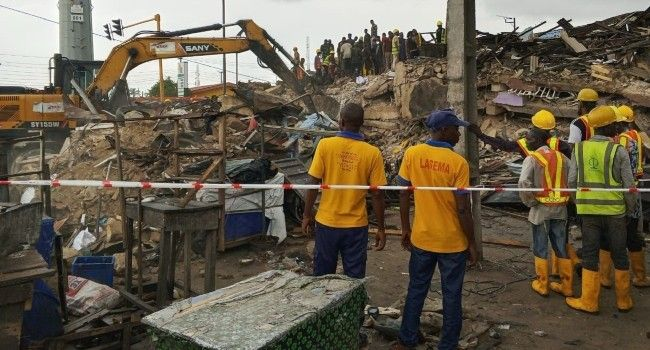
Nine people died in Alakija, Amuwo-Odofin, on Thursday, June 26, 2026. Twenty-seven others were extricated from the debris, injured. The building had previously been declared uninhabitable.
That is an important piece of context to this conversation. For years, Lagos has seen buildings collapse due to the same old suspects: substandard materials, faulty engineers, and corrupt inspectors. However, the collapse of the Alakija puts a different—and uncomfortable—question on the table. What is the point of having a government that does everything right, yet people continue to die?
The Government Had Already Acted
The Commissioner for Information in Lagos State, Gbenga Omotoso, appeared on the Arise Television News Night on Friday, the 26th of June, 2026. He described in detail what was going on prior to the collapse of that building. The building has been previously deemed unsafe and was closed down. All occupants were ordered to leave the building right away. However, residents re-occupied the building before it was taken down by the government.
Omotoso wasn’t coy about what that means. The house was designated distressed, and everyone inside was forced to evacuate. In fact, at one point, it closed, but people went back in there prior to the government occupying the house to tear it down. The next day, officials that visited the site described it even more directly. A few residents had feigned their departure, and nine people lost their lives as a result.
The Fatal Gap Was Compliance, Not Detection
This is why Alakija is not like the usual Lagos building collapse story. The system alerted them. Inspectors found the distressed building, closed the building, and instructed evacuations. This time the failure did not occur during construction. It occurred after it was detected and when people opted for economic survival over personal safety.
Omotoso admitted this. As for why it continues to happen, it’s very simple: people don’t want to follow the law. They think that their priorities should be commercial activity and livelihood, rather than life, and this is very wrong. He pushed further. “If the government deems a building unsafe, I can’t imagine anybody going there.” His message to the people was clear. No one should place livelihood before life. If lives are lost, then everything is lost. No business is worth any life.
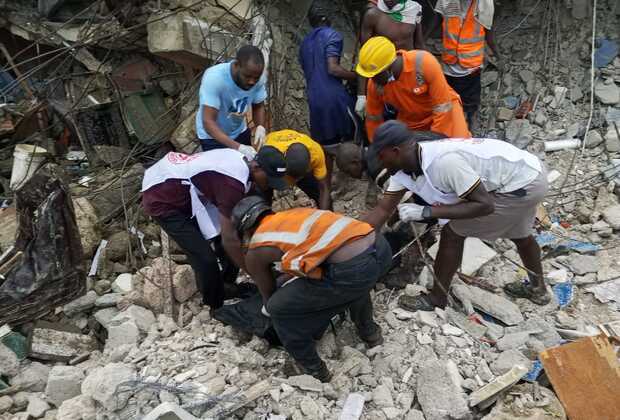
The Alakija tragedy revealed a key shortcoming in the demolition process. If a building is distressed but remains standing for an extended period of time, then marking the building distressed does not guarantee that the structure will not be re-entered at a later time. Governor Babajide Sanwo-Olu acted fast on this rationale. He directed the immediate removal of other buildings around the site of the Alakija collapse that were in bad condition. More buildings in distress would also be demolished to prevent further incidents, officials said.
Omotoso brought in an element of responsibility that went beyond the residents. Unsafe buildings would be brought to the attention of the authorities. Sanctions would be imposed on any government official that was involved in the incident. During the same presentation, the commissioner also noted an isolated but dangerous trend. He criticized building and living under the high-voltage electricity transmission lines, stating that people must adhere to safety rules and that building under the lines and living in them is very dangerous.
Dr. Tony Aspire Kolawole, Chairman, Real Estate Developers Association of Nigeria, Lagos Chapter, reacted strongly to the same-week events. He criticized the building collapses. He claimed they were “ongoing” throughout the country. The incident of a five-story building collapsing in Rivers State on June 24. A day before Alakija was also touched on by his statement. He described the two as man-made disasters due to negligence, corruption, and impunity.
Nobody may know why buildings fail. But they do. Because someone cut corners, did not observe proper standards of design and construction, used substandard materials, manipulated approvals, or failed to do proper supervision. He urged LASBCA and other agencies responsible for the building control in the state to immediately undertake a thorough building assessment of all the buildings. He identified dense residential areas as the top priority areas.
Kolawole also went head-to-head with state governments. There should be criminal penalties for developers, contractors, consultants, and property owners who do not comply with building regulations. If the buildings are demolished and the individuals not prosecuted for the damage, it will only lead to other incidents. The end answer is accountability should go to all parties, not just those entering the danger.
Two Explanations, One Recurring Crisis
The two accounts are not really conflicting. They are all a part of the same systemic failure and are equivalent descriptions of the failure. The commissioner is correct in saying that the case of Alakija is indeed a fact. A building was marked and re-entered in opposition to the direct orders of government. It’s a failure that is real and distinct, and residents who went back home are responsible for that failure.
However, Kolawole’s general argument prevails. Distress does not just happen to a building; it is caused. Materials, supervision, design, and approvals were decided somewhere upstream of that condemned building in Alakija. Those decisions decided the viability of the building as a place to be. The destruction of the structure once it has collapsed and the prosecution of occupants who were not complying cannot solve the problem that led to the hazard in the first place.
What Must Actually Change
Problems compound at every step of a building’s life cycle, causing the same cycle to repeat itself in Lagos. Corner-cutting occurs during the construction process. It’s not always reported or noticed by regulators. Stress eventually becomes distress and is identified. Residents refuse to leave the area. People die. Then the cycle is repeated.
The failure of all those who do not comply is left where it has always been if only the final step is taken. Criminal prosecution should be brought against the developers, contractors, and approval officials for allowing dangerous structures. Distressed buildings shall be demolished immediately following sealing and not weeks later. Regulatory agencies need to be adequately resourced, sufficiently sized, and free from political influence. But residents need to be aware that walking back into a condemned building is not a business or rent that’s worth their while, nor is a store.
The government is correct in saying that compliance is saving lives. The industry is correct that it is better to prevent than to treat. Lagos requires both prevention and a cure in one go and in a hurry.
Still have questions?
Navigating the real estate market can be complex. Head over to the iPropty Q&A hub to get expert answers, or ask your own question today!
Explore the Q&A Hub