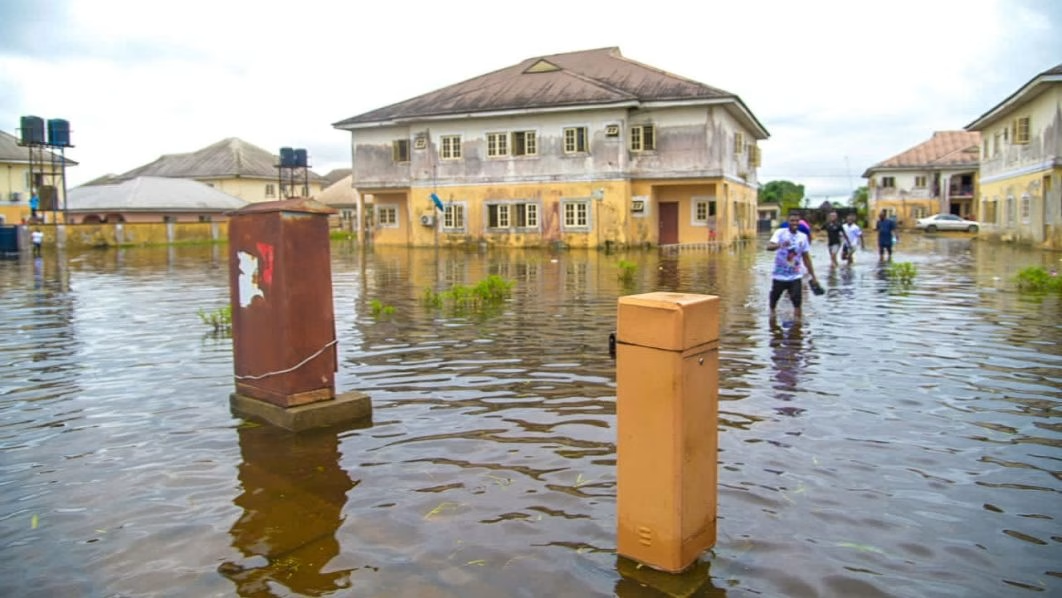
Access to affordable housing continues to be one of Africa’s greatest development issues. The population is expanding rapidly in cities all over the continent. But there is a lack of housing supply. As urban populations increase, demand for homes continues to rise. Governments are looking for viable solutions. The same is happening with the developers and investors.
This challenge is not only about house construction! This also includes funding and infrastructure issues. The planning of cities still plays a vital role. Many projects never go past the point of conception without the proper funding. Others encounter delays that result in higher costs. Others get too pricey to finish.
This is the reason why the role of the development financial institutions is increasing. Many are now focusing on housing as a key element of the strategies. One of those institutions implementing this strategy is Shelter Afrique Development Bank (ShafDB). The bank is coming up with an increased mandate to develop houses. It has singled out housing as one of its intervention areas throughout Africa.
The renewed interest is at a crucial moment. African cities keep changing as urban areas become more urban. As cities become more urban, they continue to be shaped. The population is putting demand on housing. The demand for houses is high. There is still a lack of supply in many markets. This imbalance is exacerbating housing shortages, as well.
The pressure is growing for governments to react. They have to supply sufficient shelter. Meanwhile, affordability is of concern.
Issues of housing are rapidly gaining importance as an economic driver in development. Housing is an employment and investment driver. This also has a positive impact on the general economic activity. Each housing development creates demand in a variety of sectors. This is a direct benefit to construction companies. Opportunities for manufacturers and suppliers are also present.
Financial institutions also get to play an important role. This generates other types of economic activity than the property one. The benefits are why housing is garnering increased interest. The sector is a growth catalyst for development finance institutions. They also consider it to be socially necessary.
The African Development Bank and Shelter Afrique’s development bank are stepping up their engagement. Both institutions are seeking to assist housing delivery for Africa. The intervention they provide is in the context of a major backdrop. There is an estimated housing shortfall in Africa of more than 50 million units. That number is increasing annually.
There will need to be a big investment to close the gap. There are reports of more and more capital mobilization. Affordable housing and mortgage financing are a focus. The urban planning and green construction are also given special attention. Development institutions recognize these areas as being of major importance. Both work together to help achieve sustainable growth.
The availability of long-term capital is an important constraint. There are a lot of developers who find it difficult to get funding for their projects at a low cost. This is a challenge for the delivery of the project. It can take several years to complete residential projects. Financing structures, on the other hand, are often of a short duration. This results in a discrepancy between financial and construction schedules.
That means there’s frequently a delay in getting projects finished. There are some developments that start well but never reach completion. Others never come into the planning phases. Affordability is also impacted by the limited financing. The higher the interest rate, the more expensive the development will be. Those expenses are typically passed on to the customers.
Shelter Afrique Development Bank aims to tackle these issues. The school recently introduced its new brand identity. It was made on the occasion of its 45th anniversary. The event was held at the Annual General Meeting in Morocco’s capital, Rabat. The rebranding is an expression of a general shift. It marks the institution’s progression to become a full-fledged development bank.
This is more than just a new name. The bank is improving its contribution to housing finance. It is also increasing its support for urban development. This opens up new opportunities for developers. Improving project planning through better financing. It can also alleviate the burden of repayments.
The longer the financing period, the more flexibility. Developers are able to work on bigger projects. They are also better equipped to deal with risks. Better financing could help bring more private investment. There may be more competition in markets previously unserved. Funding channels may widen, leading to an increase in investor confidence.
Managing Director and Chief Executive Officer Thierno-Habib Hann highlighted this vision. He called the metamorphosis ‘more than rebranding. ‘He said it is part of a strategic move. The school wishes to be effective and able to make a difference. It’s a housing value chain focus. That is to help provide sustainable urban development.
It is still a huge challenge. The housing deficit in Africa is more than 53 million homes, the bank said. It will take a lot of resources to fix. An estimated $1.3 trillion is needed for financing. These are just numbers that illustrate the opportunity. They also show a sense of urgency.
Financing has long been recognized as a key challenge by industry stakeholders. The problem that many developers face is obtaining a cheap source of funds. This restricts the construction work. With limited funding, home availability is limited. Project delivery slows. The growth of the market becomes more challenging.
That could change with more institutions involved. The industry can have greater confidence with more investment. Lenders/investors could become more active. It may also help construction companies. Easy access to capital opens up growth opportunities. It facilitates the project execution in some markets.
More than just residential buildings are needed for housing development. It is also essential to have supporting infrastructure. Roads and utilities continue to be critical. Public services also impact the success of a project. Integrated planning is needed for large-scale developments. Growth of housing and infrastructure should go hand in hand.
Knowing this link, the bank’s mandate is not confined to housing finance. It also aids in the development of urban infrastructure. This way of doing is good for sustainable growth.
Chairman Lionel Zinsou has stressed tangible results. His yardstick for success is results. The reforms in institutions are not sufficient. He cited houses funded and cities enhanced. Job creation continues to be an important indicator. The end goal is to make a difference in the lives of people.
This view is now becoming commonplace throughout the sector. The focus on stakeholders is increasingly on practical outcomes. The delivery is of equal importance now as it is in the planning. Stronger financing ecosystems bring more benefits to the property markets. Employment is affected by construction activity. It encourages demand in other industries that are related.
A resilient economy can be reinforced by higher housing investment. It can also be used to alleviate housing shortages. The benefits don’t just apply to real estate. The broadened mandate just comes in time at the institution. The demand for quality housing is on the rise. Apply the force to urban centers.
Investors and builders are looking for a solution. So are the governments. Greater financing could help fill the gaps that already exist. There’s still some work to do, but people are getting ready. There is a growing role for development finance institutions. Housing is increasingly a top priority issue.
This is a big change for property professionals. Increased investment may open up additional avenues. There is potential for markets across Africa. Housing is becoming more and more a necessity as well as an investment opportunity. With increasing support in place, the sector could be moving into a new phase. The next few years may define the course of urban development on the continent.