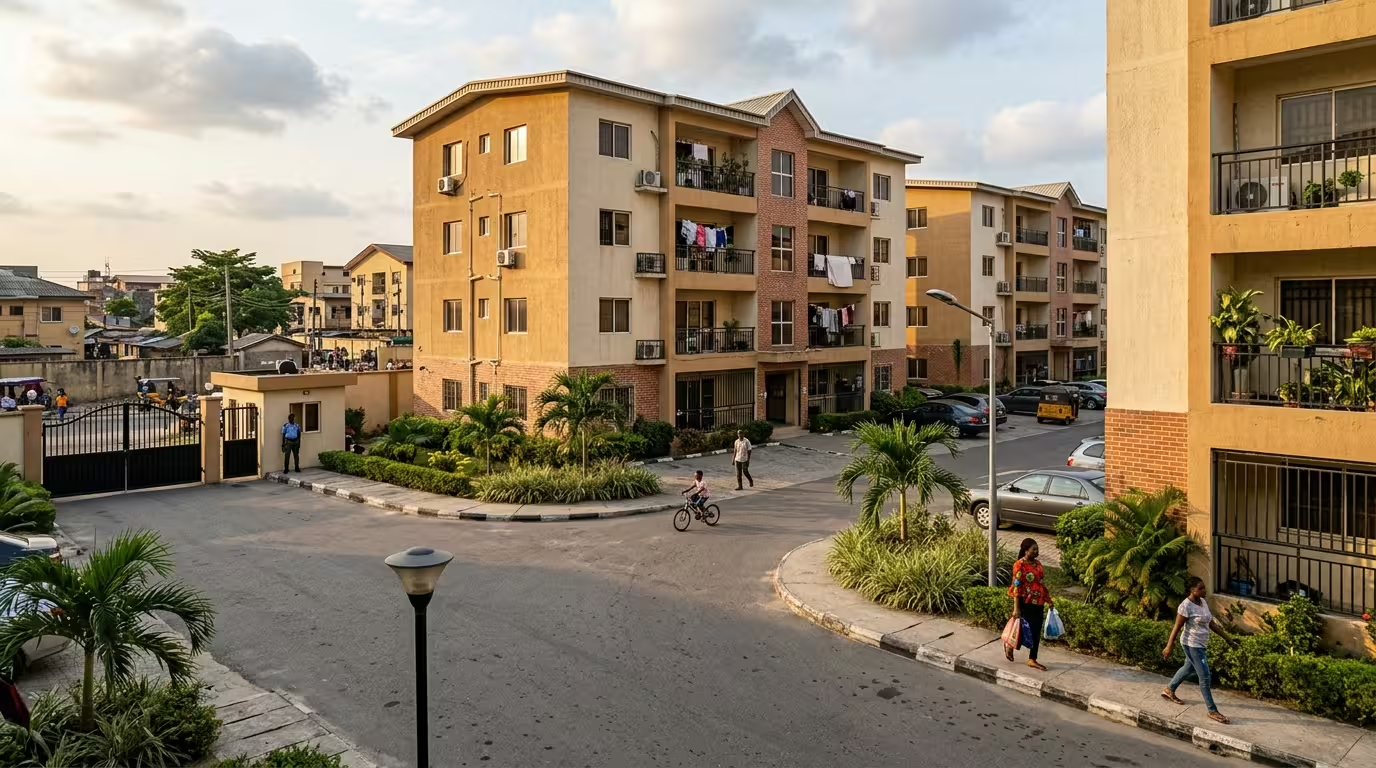
Rental property is a prestigious and profitable venture that has its fair share of duties and difficulties that we need to address in Nigeria.
Rental properties are a promising source of long-term investment in business areas like Lagos and Abuja because of their capacity to generate constant cash flows and increase in value. But owning property is not sufficient, and landlords always have trouble after acquisition.
Sound property management is important because it influences profitability. Incompetent management might lead to property-related problems like rent defaulting, vacancy, damaged property, and lawsuits.
Well-kept properties will appeal to good tenants, bring about stable cash flows, and appreciate in value.
This article has emphasized the importance of property management concerning rental properties in Nigeria. This contains the main things that landlords should carry out and systems that make running rental properties easy and profitable.
The guide will be of great help to anyone planning to become a landlord or those intending to expand their property management knowledge to have a more insightful understanding of the complexity of managing property in Nigeria.
Property Management in Nigeria: The Actual Definition in 2026
In Nigeria, property management is a continuous process of managing and maintaining residential and/or commercial properties.
It will comprise all services required to keep the property running, occupied, and profitable. It includes the sourcing of tenants, rent collection, repairs and maintenance, tenant disputes, and compliance with the law.

In plain words, it is the thought of some property owners that to run a property; it is just a matter of gathering the rent annually or monthly. It is actually a working process, and you must pay attention to.
However, every interaction with a tenant, every maintenance project, every lease, and every contract is a step towards maximizing the performance of the property.
Good management maintains the value of a property. A well-maintained property will remain in condition and be desirable, whereas a poorly maintained one will deteriorate.
It also helps to eliminate conflict because with explicit agreements and constant reinforcement, the relationship between the owner and occupier is crystal clear.
Finally, the right management increases cash flow. On-time payment of rent by tenants and effective maintenance expenditure maximize profit.
In a nation where deal-making is still informal, such as in Nigeria, professional property management gives landlords a competitive advantage.
Main Responsibilities of a Landlord in Nigeria
The initial move towards controlling rental property is that the landlord must know his or her responsibilities. These responsibilities work together, and failure to accomplish one influences the other responsibilities.
1. Tenant screening and management
In Nigeria, tenant screening is a very important property management process. The profile of tenants impacts the stable cash flow and the integrity of the property. A good tenant will pay rent on time, take care of the property, and adhere to the lease agreement. However, a bad tenant may cause losses of finances and frustration.
To vet a tenant, the landlord must verify their identity by checking an authentic ID card, such as a national ID, driver’s license, or international passport. The landlord should also request employment information or income evidence to determine whether the tenant can pay the rental fee. The references of landlords or employers can also provide more information about the character of a tenant.
Guarantors are prevalent in Nigeria. This will provide an added security level whereby someone can intervene should there be a default. Sometimes (in critical situations), landlords will even demand bank statements or informal background checks (particularly of costly property). Comprehensiveness should be extensive but just.
Treat all applications with similar standards to avoid discrimination and to have a professional approach.
2. Collection and arrears of rents
The largest source of income for landlords is rent. Therefore, rent is a very important aspect of housing management in Nigeria. The determination of rent should take into consideration market factors such as the location, the type of property, and demand. Exorbitant rents may cause prolonged vacancy, and lower rents reduce potential revenue.
Rent is determined as part of a written tenancy agreement. This must specify the amount of rent to be paid, the time, and the interest on the overdue amount. This will help avoid misunderstanding in the future. Rent collection systems are gaining relevancy in present-day property management.
Clear due dates and follow-ups, along with reminders, increase collection rates. Electronic transfers are more desirable than cash payments because they do away with any doubts about payments.
Arrears management entails firmness and good communication. Landlords should make the payment, but a friendly and professional attitude towards tenants can help to promote a more cooperative and timely attitude.
3. Repairs and maintainability
The maintenance of property is a rule of law and practice. It is the duty of the landlord to offer a safe and livable house. The owner normally takes care of key structural aspects like the roof, plumbing, electrical, and the structural integrity of the building.
Regular maintenance can avoid minor issues and prevent major repairs. We can avoid water damage by repairing a minor leak, e.g.
It means that proactive maintenance in Nigeria in relation to renters, and repairs would mean investing in maintenance.
By saving between five and ten percent of every annual rent as a repair fund, one can ensure that there is the ability to make the needed repairs immediately without the need to strain his or her budget.
Inspections have to be made regularly as well. Careful inspection of roofs, plumbing, and electrical fixtures may detect issues early. Pest control, painting, and other repairs help ensure the property is in the best possible condition.
Legal and Compliance Basics for Landlords
The property management in Nigeria guide has to know the law as a prerequisite. These vary among states, but there are certain basic ones that are shared by all states.
Important laws that landlords should know:
The law of land property in Nigeria is based on the Land Use Act of 1978. It regulates the allocation of land and its selling; hence; it applies in real estate deals.
Also, state-specific tenancy laws govern leases. An example is the Lagos State, which has certain laws that regulate the rights and obligations of the two parties.
It is also necessary that tax compliance be done. Landlords may be subject to payment of withholding tax, commercial property value-added tax, and sales and capital gains tax.
Being conversant with such standards will save you from fines and will be certain to ensure that you are appropriately managing rental income.
The laws and regulations will vary depending on the state in which you live. And hence, we encourage landlords to conform to the laws and regulations in their respective states.
1) Notices and tenancy agreements
The tenancy has to be a formal tenancy. This contract provides the details of the landlord-tenant relationship, comprising rent, duration of tenancy, payment, maintenance requirements, and dispute settlement. An agreement removes ambiguity and provides a reference for subsequent disagreements. And it fortifies the landlord in the event of legal action.
The other component of compliance is notices. All rent increases and terminations of leases have to be notified in writing and within the specified time scales. Otherwise, the acts are not valid, and the tenant may take legal action against the landlord.
2. Deposits, rent increases, and termination
Nigerian leases contain a security deposit or caution fee. Landlords use these deposits to cover losses from damage and nonpayment of rent, and they usually return them when the tenancy expires.
The landlords are free to raise the price of rents, although these must be reasonable and clearly announced. In the event of large, unexpected increases, there can be disputes and vacancies.
Evictions are a highly sensitive issue in rental properties. It must proceed through certain legal procedures, including giving notice and, potentially, court proceedings. Evictions that are illegal may lead to lawsuits and negative publicity.
When Do You Need a Property Manager?
There are landlords who lack the time, place, or ability to take care of their properties. Therefore, it is sometimes prudent to hire a property manager or caretaker, especially when you have several properties or when you are far from the property.
A property manager will be in charge of such valuable services as finding tenants, rent collection, arranging repairs and maintenance, and addressing the concerns of tenants. This eases the daily burden on landlords and gives a systematic and uniform way of operating the property.
Good management will mean that there is minimal downtime, higher retention of tenants, and better cash flow.
The major advantage of property managers is that they do things in an efficient manner. The property manager solves issues fast, manages tenants effectively, and maintains the property.
However, this is at a cost, which is usually a management fee. It is a choice that landlords need to make at the expense of their time and the chance of higher returns.
IPropty Limited is an example of such a company in Abuja that provides services in managing properties. They assist property owners to organize tenants, collect rental revenues, and maintain properties in order to make the processes effective and reduce risks. You can contact iPropty here.
Finally, one needs to choose a property manager carefully. The protection of your investment property will depend on factors such as trust, experience, and track record.
How to Manage Properties in Nigeria
Skilled property managers embrace common practices to increase efficiency and profits. The following are some of them that would help in enhancing property yields today.
- Establish definite house rules at the start of the lease and follow them. This avoids confusion.
- Properly record transactions, including rent and repairs. This increases transparency and contributes to solving conflicts.
- Budget a repair fund in case of urgent repairs that are not related to cash flow.
- Be prompt in responding to tenant complaints. This will create trust and encourage long-term tenancy.
- Be abreast of market trends to achieve competitive rents. Should be open to the change in rents.
- Create a reminder of payments of rent and track payments using technology. These software programs facilitate management.
When adhered to, these measures put in place a guideline on how to control rental houses in Nigeria.
Quick Checklist of Landlords in Nigeria.
Before and during tenancy, landlords should make sure that certain processes are done. Signed tenancy agreements with tenants should be in place specifying the tenancy terms. Identification of tenants, references, and, where necessary, guarantors.
The payment of rent must be by traceable means (bank deposit or transfers). Repairs should be saved from a percentage of the income.
In addition, the general tenancy and tax laws in their jurisdiction should be familiar to the landlords. Rents and termination of leases should be increased and given notice as per the law.
This checklist enhances calmness and stability in property management.
FAQs on Property Management in Nigeria
1) What are the key legal responsibilities of a landlord in Nigeria?
The main legal requirements are the decent living standards, rights of tenants, and adherence to state legislation of tenancy and taxation. These responsibilities offer secure and legal property management.
2. Can we take cash-only rent?
Although cash payments are possible, they are not recommended. Transfers online offer credible record-keeping, prevent controversies, and enhance transparency.
3. What are the ways through which a landlord can evict a tenant in Nigeria?
Some reasons that may lead to the eviction of a tenant include default in payment of rent, breach of contract, or termination. This has to be given notice, and a court order may be necessary in case the tenant disagrees with the eviction.
4. What can landlords do to decrease tenant turnover?
To retain tenants, keeping tenants informed, responding promptly to tenant complaints and ensuring that the property is in good condition can all contribute to tenancy retention.
5. Do I need to hire a property manager?
When you own more than one property or have little time to take care of your property, a property manager would be able to help you be more efficient and reduce stress. But put the costs and benefits on the scale.
6. What is the maintenance frequency required?
Repair should be continuous, and inspection should be at least once a year. Early solving of problems minimizes the amount of repairs.
Final Thoughts on Property Management in Nigeria.
Management of rental property in Nigeria means more than just owning property; it involves managing an asset so that it can continue to perform and be valuable. The work can be stressful, yet it is necessary to keep profits up and prevent mistakes.
Being well-organized, disciplined, and paying attention to detail regarding the management of rental properties should make Nigerian owners successful.
Focusing on tenant relations, maintenance, and compliance with legal and other regulations could create a profitable rental property business.
This is not so much about the property ownership, but it is also about establishing a mechanism to sustain the property. Properly handled, property management is a plus.