Buying property in Nigeria is exciting, but it can also be confusing, especially when you hear terms like Certificate of Occupancy (C of O), Deed of Assignment, and Governor’s Consent. Many first-time buyers assume these documents mean the same thing. They don’t.
At iPropty, one of the most common questions we receive from property buyers is:
“The seller has a Deed of Assignment. Does that mean the property is safe to buy, or do I still need Governor’s Consent?”
It depends on how the original owner got the place in the first place and if all the old paperwork is in order.
Here’s a typical example.
Imagine you buy a house in Lagos from a private owner. The seller presents a valid Certificate of Occupancy and a Deed of Assignment, so everything appears to be in order. Months later, when you apply for a mortgage or decide to resell the property, your lawyer discovers that the previous transfer was never perfected through the required government approval.
Suddenly, what looked like a straightforward purchase becomes a legal and administrative process that could delay your plans and increase your costs.
Situations like this are one reason we advise buyers to investigate the entire chain of title, not just the documents presented by the seller.
Under the Land Use Act 1978, a holder of a statutory right of occupancy cannot transfer that right to another person without the consent of the Governor of the state (or the authority in the Federal Capital Territory). Section 22 of the Land Use Act lays down this legal rule, and it’s how we get Governor’s Consent.
In Abuja, the Minister of the Federal Capital Territory is the one who approves statutory right of occupancy transfers, not a state governor.

Understanding this distinction is important because a Certificate of Occupancy and Governor’s Consent serve different legal purposes. One establishes a statutory right of occupancy, while the other approves the transfer of that existing right from one owner to another. Confusing the two can lead to unnecessary delays during resale, mortgage applications, title verification, or other property transactions.
In this guide, you’ll learn:
- What a Certificate of Occupancy (C of O) is.
- What Governor’s Consent means and when it is required.
- The legal differences between the two documents.
- Typical processing procedures, timelines, and costs in Lagos, Abuja (FCT), and Rivers State.
- Common mistakes buyers make when verifying property titles.
- Practical steps to protect yourself before paying for any property.
Whether you’re buying your first plot of land, investing in rental property, or selling an existing property, understanding these documents will help you make informed decisions and reduce the risk of costly legal problems later.
What is Governor’s Consent in Nigeria?
Governor’s Consent is the official approval granted by the Governor of a state. In the Federal Capital Territory (FCT), the authority for transferring a statutory right of occupancy from one person to another is the Honourable Minister.
The requirement comes from Section 22 of the Land Use Act 1978, which provides that a holder of a statutory Right of Occupancy cannot legally transfer that right by assignment, mortgage, sublease, or other means without obtaining the Governor’s consent.
So, if someone wants to sell land or a house with a valid title, the government has to approve the transfer before it’s final under Nigerian law.
Each document serves a different purpose. Having one does not replace the others.
Why Does Governor’s Consent Matter?
The Governor’s Consent is a big deal, but only after the sale is done.
For example, you may need it when:
- Selling the property to another buyer.
- Applying for a mortgage or using the property as collateral.
- Conducting legal due diligence before a major investment.
- Updating ownership records during future transactions.
As property managers, we encourage buyers to think beyond today’s purchase. If you don’t handle the paperwork now, a place that seems cheap could cost you more later.
Practical Tip: Before paying for any property, ask your lawyer to verify the complete chain of title at the relevant State Land Registry. Or the Abuja Geographic Information System (AGIS) if the property is in the FCT. Reviewing the seller’s documents alone is rarely enough.
Therefore, you shouldn’t view Governor’s Consent not just as another government document, but as an important safeguard that ensures Nigerian law properly recognises ownership transfers.
Governor’s Consent vs. Certificate of Occupancy (C of O): What’s the Difference?

One of the biggest misconceptions in Nigerian real estate is that a Governor’s Consent and a Certificate of Occupancy (C of O) are interchangeable.
They are not.
These documents concern land ownership, but they perform different legal functions and the authorities issue them at different stages.
A simple way to understand the difference is this:
- The Certificate of Occupancy (C of O) establishes the original statutory right to occupy the land.
- The Deed of Assignment records the agreement between the buyer and the seller.
- Governor’s or Minister’s Consent is the government’s approval of that transfer, completing an important stage in the title perfection process.
One creates the right, while the other recognises its transfer.
A Real-Life case study.
Imagine a parcel of land in Rivers state allocated by the government to Mrs. Amina.
After meeting all statutory requirements, she got a Certificate of Occupancy (C of O). At this stage, she becomes the recognised holder of the statutory right of occupancy.
Several years later, she sold the land to Mr. Emeka.
Both parties sign a Deed of Assignment, documenting the sale and the agreed terms.
However, because the property is changing ownership, the transaction demands that the Governor consents before the transfer fully perfects under the Land Use Act.
Years later, Mr. Emeka sells the same property to another buyer.
Again, a new Deed of Assignment is prepared, and another application for Governor’s Consent is required because a new transfer is taking place.
This illustrates an important point:
They do not reissue a Certificate of Occupancy every time a property changes hands. Instead, they perfect each subsequent transfer through the government approval process.
Side-by-side comparison of C of O and Governor’s Consent
| Feature | Certificate of Occupancy (C of O) | Governor’s Consent |
| Primary purpose | Establishes the original statutory right of occupancy. | Approves the transfer of an existing statutory right of occupancy to another person. |
| When it is issued | Usually, when land is first allocated or regularised by the government. | After a property owner transfers their interest to a new buyer. |
| Legal basis | Land Use Act 1978 and applicable state land administration regulations. | Section 22 of the Land Use Act 1978 and applicable state procedures. |
| Who applies? | The original allottee or person entitled to the first statutory title. | The parties involved in the transfer, usually through their legal representatives. |
| Purpose in future transactions | Forms part of the property’s root of title. | The document integrates into the property’s chain of title, demonstrating that the transfer receives official approval. |
Which One Do You Need?
It all depends on how you’re getting the property.
You might get a Certificate of Occupancy if you purchase land allocated by the government, based on the state process.
If you are buying from someone who already owns the property, you need to check the seller’s title and make sure you complete the transfer process. This might require getting the Governor’s Consent if it is necessary.
More reasons you must ask beyond whether a property has a C of O. Instead, ask questions such as
- Is the seller the legitimate owner?
- Is the Certificate of Occupancy genuine?
- What is the documentation for the previous transfer?
- Are all the required government approvals in place?
- Does the chain of title reveal any gaps that could create future legal problems?
Those questions matter far more than simply checking whether a single document exists.
Don’t Judge a Property by One Document
Another mistake buyers often make is believing that possession of a Certificate of Occupancy means a property has a perfect title.
A valid C of O doesn’t guarantee everything’s fine if they didn’t complete previous ownership transfers.
Likewise, seeing a Governor’s Consent does not remove the need to verify the documents that came before it.
A proper title investigation looks at the complete history of ownership, not just the most recent document presented by the seller.
iPropty Due Diligence Tip: Ask a professional to review the property’s root of title and chain of title, not just the latest document. A complete title history provides a clearer picture of ownership and can reveal issues that are not obvious from a single certificate.
What Does It Mean to Perfect a Title?
Most buyers zero in on bargaining out the price, checking out the place, or sorting out the money. As experts, we know that a nice property can turn into a headache if the title paperwork is incomplete or faulty.
Finding the right property is only part of a successful purchase. Ensuring that the ownership documents are legally complete is as important.
In Nigeria, perfecting your title is non negotiable. Title perfection is all about getting every legal document, registration, and approval sorted for a property. It’s about doing the official paperwork to make sure the government knows you own it.

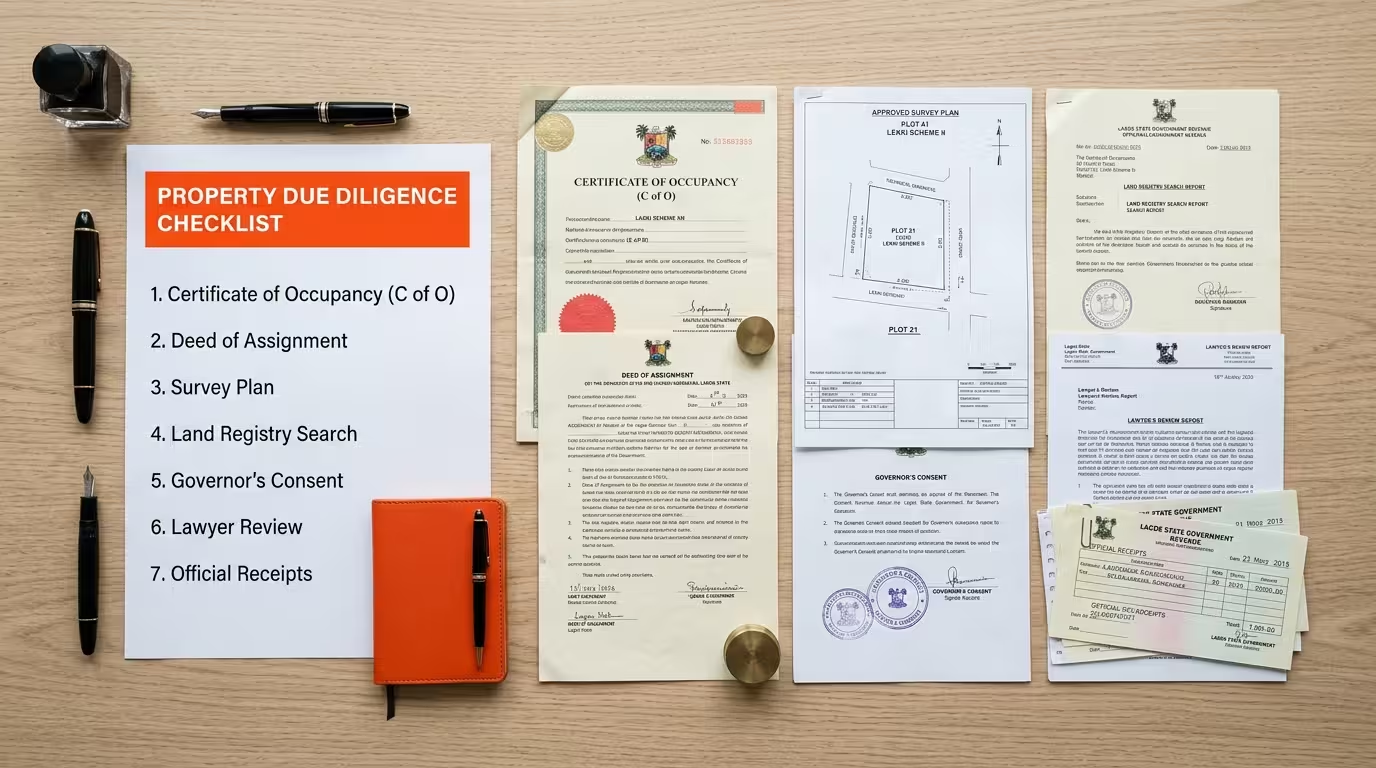
Depending on the property’s history, this may involve documents such as:
- Certificate of Occupancy (C of O)
- Deed of Assignment
- Governor’s Consent
- Stamp Duty
- Registration at the appropriate Land Registry
The exact requirements vary depending on the property’s history and the state where it is located.
A property may look attractive, be in a desirable location, and even have a willing seller. None of those guarantees that the ownership records are complete.
Here are some of the practical reasons you should pay close attention to title perfection.
1. It Reduces the Risk of Ownership Disputes
So, you buy land, and down the line, it turns out a past sale wasn’t perfect.
If you don’t catch problems before buying, you might have to spend a lot of time and money fixing them later.
Good documentation won’t wipe out ALL legal risks, but it helps if someone questions ownership.
2. It Makes Future Sales Much Easier
Today’s buyer may become tomorrow’s seller.
When that time comes, those who want to buy will ask you for the property’s title documents before committing to the transaction.
A solid title shows the ownership history is clear, cutting down delays during checks.
If a property’s documentation isn’t all there, it’ll take longer to sell since a lot of Nigerians are wary of inheriting legal headaches.
3. Banks and Mortgage Lenders Carry Out Their Own Due Diligence
If you intend to use your property as security for a loan, don’t assume the bank will rely only on the documents you provide.
Banks usually do their own checks.
If the paperwork isn’t all there, it could slow down the approval process or require extra legal work before they accept the paperwork for collateral.
4. It Protects the Value of Your Investment
Real estate is often one of the largest financial investment you will ever make. Proper title documentation helps preserve that investment by reducing avoidable legal uncertainty.
No matter what you plan to do with the property; build, rent, pass it down, or sell later, having a solid title means you can be more sure that future deals will go off without a hitch.
Turns out, verifying a professional title is way cheaper than dealing with ownership fights post-purchase.
iPropty Due Diligence Tip: Before paying a deposit, ask your lawyer to verify the property’s title directly with the relevant State Land Registry or the Abuja Geographic Information System (AGIS), where applicable. Never rely solely on photocopies or verbal assurances from a seller or agent. Independent verification is one of the simplest ways to reduce legal risk.
How to get Governor’s Consent in Nigeria: A Step-by-Step Guide
Getting the Governor’s Consent is a lot more than dropping off some papers and hoping for the best. This is a formal legal step to check if the ownership change meets the Land Use Act 1978 and the state’s land procedures.
Even though the exact rules vary by state, the process is the same all over Nigeria.
Your lawyer may handle most of the property buying stuff for you. But knowing each step yourself helps you see what’s coming and spot delays before they get expensive.
Professional Insight: Once the buyer and seller wrap up the sale and sign the Deed of Assignment, the Governor’s Consent is next. It’s a major step in perfecting the buyer’s title.
Step 1: Execute the Deed of Assignment
The process usually begins once the buyer and seller have agreed on the purchase price and transaction terms.
Both parties sign a Deed of Assignment, which records the transfer of the seller’s interest in the property to the buyer.
This document typically contains:
- The identities of the buyer and seller.
- A description of the property..
- The agreed purchase price or consideration.
- The date of transfer and history of ownership.
- The rights being transferred.
- The signatures of both parties and witnesses.
This document is super important for the property’s title history.
Common Mistake: Some buyers download generic deeds of assignment or use poorly drafted templates. Errors in this document can create legal complications during title perfection or future resale.
Step 2: Conduct Title Verification and Property Search
Before approving the transfer, government officials must verify the property’s records.
This stage answers important questions such as
- Is the seller the registered owner?
- Does the property already have a valid title?
- Are there mortgages or encumbrances?
- Is the land affected by government acquisition or planning restrictions?
- Are the survey details consistent with government records?
Depending on the state, this verification may involve searches at the State Land Registry, survey offices, or other relevant government agencies.
I recommend completing these searches before paying the full purchase price rather than waiting until after the transaction.

Step 3: Apply for Governor’s Consent
When the documents are ready, you hand in the application for Governor’s Consent to the proper land administration office.
While requirements vary between states, applicants are commonly required to provide documents such as:
- Executed Deed of Assignment.
- Existing title documents.
- Survey Plan.
- Evidence of tax clearance, where applicable.
- Passport photographs and identification documents.
- Completed application forms.
- Other documents requested by the relevant authorities.
The office then reviews the application to ensure it complies with applicable laws and administrative requirements. If they need more information, they will ask you or your legal representative.
Step 4: Property Assessment and Payment of Statutory Fees
Once the application passes the initial review, the officials assess the property for the statutory charges payable.
Depending on the state and the nature of the transaction, these charges may include:
- Governor’s Consent fee.
- Stamp Duty.
- Registration fee.
- Capital Gains Tax (where applicable).
- Other government-approved administrative charges.
The cost varies from state to state and is based on the property’s value, location, and government rules.
Buyer Beware: Be cautious of anyone requesting unofficial payments or promising to “fast-track” approval outside established government procedures. Always pay through official government channels and keep your receipts.
Step 5: Approval, Registration, and Collection of Documents
Once your documentation meets all legal requirements and you have your approval, the documents go into the official land records, noting the ownership transfer. Also, they will send you certified copies of the documents.
Keep these documents safe because you will need them later for sales, mortgages, inheritance, or legal checks.
Questions on Governor’s Consent vs Certificate of Occupancy
Can a property have two valid Certificates of Occupancy (C of O)?
No. A property should not have two separate valid Certificates of Occupancy covering the same ownership interest. If you discover multiple C of Os relating to the same property, treat it as a warning sign rather than assuming both are genuine. Ask a qualified property lawyer to investigate the property’s history and conduct an official search at the relevant Land Registry before making any payment.
What Usually Causes Delays?
Often, it’s not just one problem causing delays, but several things adding up. You can’t control every step, but turning in complete and accurate documentation from the start can cut down on delays.
If a property has a Certificate of Occupancy, do I still need Governor’s Consent?
The answer depends on the property’s ownership history and the nature of the transaction. A Certificate of Occupancy gives you the official right to occupy. When the property changes hands later on, you might need the Governor’s Consent to make the transfer official, according to the Land Use Act.
Can I buy land with only a Deed of Assignment?
A Deed of Assignment is a key legal paper since it writes what the buyer and seller agreed on and the history of ownership. But don’t think of it as the only document you’ll need. Before you buy, verify the seller’s ownership, past transfers, and all required approvals from the government.
How long does it take to get Governor’s Consent?
There is no single timeline. It really depends on the state, the deal’s complexity, your document accuracy, and the land office’s workload. Instead of trusting unofficial guesses, check with the Ministry of Lands or talk to qualified professionals handling your deal.
Who usually pays for Governor’s Consent?
In many private property transactions, the buyer bears the cost of perfecting the title, including expenses associated with obtaining Governor’s Consent. However, this is a matter of negotiation between the buyer and the seller. The sales agreement should clearly state which party handles each statutory fee and transaction cost.
What happens if the Governor’s Consent is never got?
You might run into trouble down the road if you skip getting the Governor’s consent when it’s mandatory. If you find out a past transfer didn’t go through, get legal help before you buy or sell again.
Can I build on my land before obtaining Governor’s Consent?
It really comes down to a few things, like the property’s title, whether it’s got the green light from planning, and what the state rules are. Some buyers build while the title is still being sorted out; others wait until they have all the documents. Most times, I advise you to wait until you complete registration.
How can I verify that a Governor’s Consent is genuine?
Do not rely solely on photocopies, scanned documents, or verbal assurances. The safest approach is to conduct an official verification through the relevant State Land Registry or, for properties in the Federal Capital Territory, the Abuja Geographic Information System (AGIS). Independent verification remains one of the most effective ways to reduce the risk of fraud.
Can a Governor refuse to grant consent?
Yes. If you don’t meet the legal or admin requirements, the governor might not accept your application. If they reject your application, find out why and ask a professional what your options are.
What is the difference between Stamp Duty and Registration?
Although both form part of title perfection, they serve different purposes. Stamp Duty is a tax imposed on certain legal instruments, while registration is the official recording of the transaction in the government’s land records. Completing one does not automatically replace the other.
Does Governor’s Consent expire?
Governor’s Consent does not operate like a temporary permit. Once it’s properly granted, it becomes part of the property’s title history by noting the approved ownership change. You might need fresh documentation and approval for future sales because they involve transferring ownership.
Is it compulsory to hire a lawyer?
The law does not require every buyer to engage a lawyer in every property transaction. Because property buying involves a lot of money and complicated paperwork, talk to a lawyer or a property management company. A good property lawyer can look over the title papers, check everything out, find any problems, and make sure the deal follows the rules.