
The government has been stressing the need for tax payment. For people and businesses in the Federal Capital Territory (FCT) not to be afraid to pay taxes. If they are to continue investing in public resources. Resources like roads and urban expansion in the division.
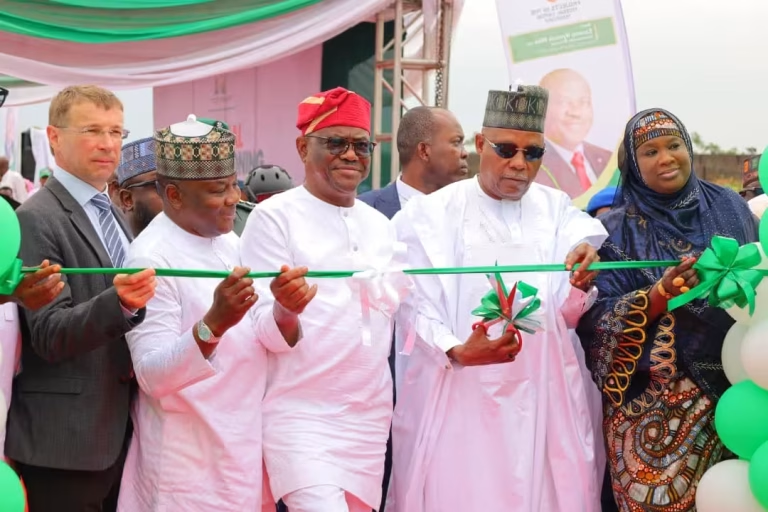
President Bola Ahmed Tinubu confirmed the position. Which was during the commissioning of the completed Arterial Road N5 project. The one connecting Life Camp Junction with Ring Road III in the Dape District of Abuja. The newly completed road corridor is anticipated to enhance connectivity. Mostly among several developing communities. And facilitate economic activity in one of the capital city’s fast-growing corridors.
The president, through Vice President Kashim Shettima, called on the residents. He encouraged businesses and property owners to pay their appropriate quota in taxes. From ground rents and other statutory obligations. Which will be for the public infrastructure.
He said that sustainable urban development is impossible without a sustainable source of revenue. As that would enable the government to fund key infrastructure projects. And also sustain existing public facilities.
These are the president’s comments. The city of Abuja is still witnessing a rapid increase in population and urbanization. And demand for transport, housing, and public services. Government officials believe that internally generated revenue will be needed to keep the expansion going. As it moves into new districts and suburban communities.
The finished Arterial Road N5 is a real-world use case of how public money becomes public works. Thereby benefiting the people, the businesses, and the investors.
The road will link Life Camp Junction to Ring Road III and improve access to Dape and other communities. It also improves transportation connectivity to the Idu Industrial District. Which is one of the major economic and logistic centers in Abuja.
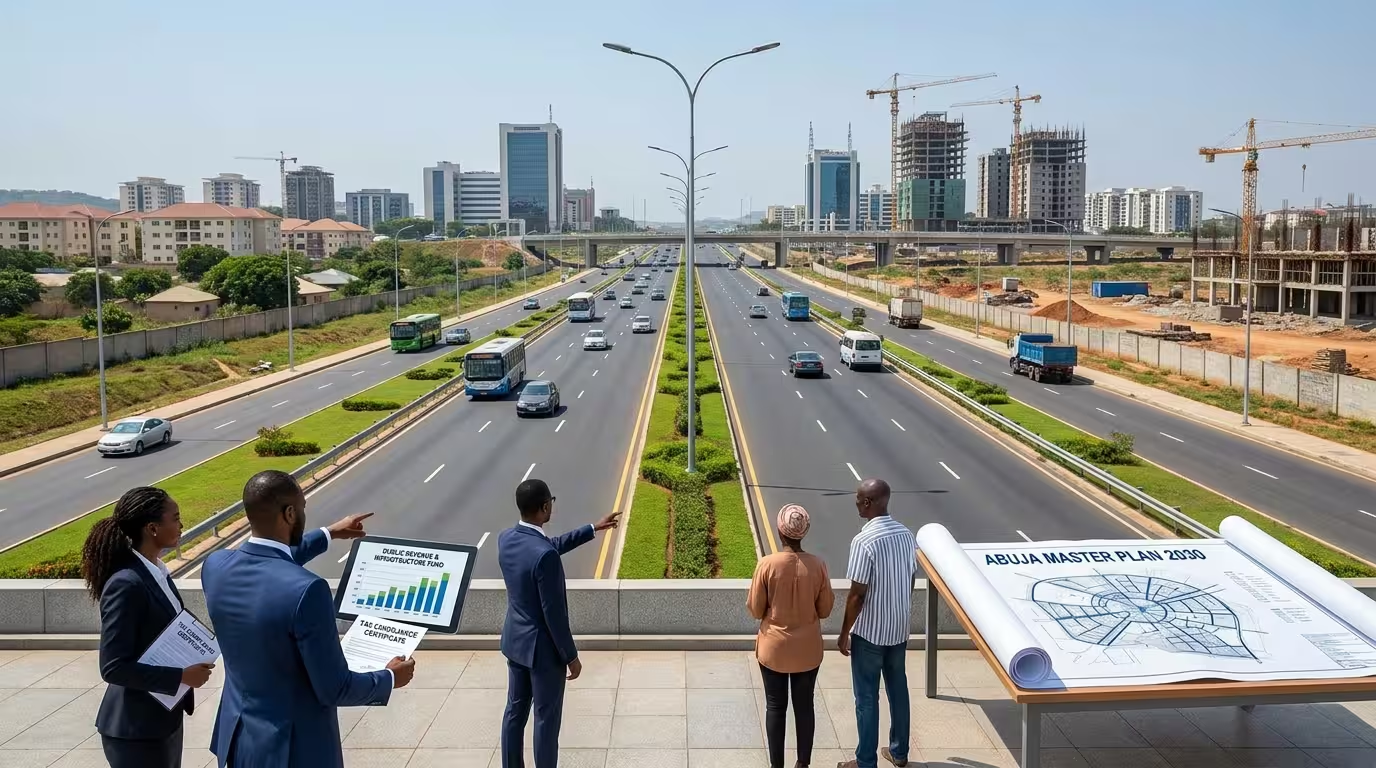
The project will benefit both commuters and residents. With the potential to shorten travel times and enhance mobility along the corridor. For businesses, better road access might help with the transport of goods and services. It also fosters wider economic development in the region.
For property developers and real estate investors, the value of the project is much more than transportation.
The growth and appreciation of land value is a key driver of real estate. And has been seen for a long time with infrastructure investment. Developing new roads, bridges, and transport corridors can bring development opportunities. That were previously unavailable. And this was due to a lack of access and conditions that can attract residential, business, and industrial investment opportunities.
Hence, infrastructure funding continues to be one of the most closely watched indicators. Mostly among the various stakeholders involved in the property market. Those who want to know where to find investment opportunities and potential growth corridors.
The president said infrastructure development must be considered as a partnership. Which is between the government and the citizens.
He said that public works are funded by collective contributions. And that taxation is an essential element of the national and urban development policy.
His remarks echo the federal government’s wider view. The view that greater tax compliance will lead to a reduction in the need for borrowing. And that this will enhance the government’s capacity to provide needed infrastructure and public services.
With the ongoing implementation of fiscal reforms in Nigeria to enhance public revenue generation and increase tax administration efficiency, the issue is becoming more relevant.
Recent tax policy efforts have been directed towards broadening the tax base. Also enhancing the tax collection process. And designing more efficient and transparent tax systems that can serve the long-term growth of the economy.
Government officials believe sustainable financing of infrastructure projects and other development priorities throughout the country requires these reforms.
The issue of tax compliance is particularly relevant in the Federal Capital Territory. Owing to the special status of the territory as Nigeria’s administrative capital. And one of the fastest-growing urban centers in Nigeria.
Population growth has been persistent in Abuja over the last decade. It has placed a growing strain on transportation, housing, and health facilities. Also the educational institutions and public utilities.
The needs to meet these demands are ongoing investments in infrastructure. And these ongoing revenues are needed to support these investments.
But the fight over taxes is not a fight for many residents.
Issues are often raised about the effectiveness of public expenditure. And whether taxes are being spent for tangible betterment of infrastructure and service delivery.
Taxpayers’ trust and confidence grow as they see the positive impacts of their taxes. As the roads finished, the transportation system upgraded, the public facilities bettered, and the city infrastructure improved.
The Arterial Road N5 project is thus a landmark in infrastructure. It is also an example of the tangible impact that public funds can have on development.
The connection between the quality of infrastructure and investment activities is especially significant. Particularly in the property market of Abuja.
When well-planned, transportation corridors will help to make the surrounding area more accessible. It will make it more attractive and more likely to attract investment in the private sector.
A developer’s focus may be toward areas that offer a good infrastructure network. This is because better access will make a project more viable to undertake. It will also foster property value growth in the area over time.
Investors also often look at infrastructure. Mostly when considering investment opportunities in emerging districts and growth corridors.
The expansion of Abuja is expected to bring more attention to the areas traversed by major transport initiatives from homebuyers, developers, and commercial investors, who will seek to invest in the city’s future growth potential.
But it is not just infrastructure that determines economic growth. It provides the conditions for wider growth through increased mobility. Also, the facilitation of trade and the attractiveness of investment destinations, according to industry commentators.
The president’s remarks reflect the increased understanding that sustainable urban development needs a mix of public investment and civic engagement that is responsible.
Governments derive the resources to fund the essential projects without too much pressure. Due to tax compliance, ground rent payments and other statutory obligations.
The strategy is a more sustainable path towards long-term development for policymakers.
It brings a sense of responsibility. For businesses and residents to play their role in furthering progress.
The increasing urban character of the Federal Capital Territory will lead to a growing need for investment in infrastructure. And policy debates on infrastructure funding are likely to continue to be a central focus.
Population growth and economic growth will likely continue to accelerate. It will lead to an increasing demand for roads and public facilities. Also transportation networks and other urban infrastructure.
In this context, the government officials believe that enhanced tax compliance will be vital. Majorly to further the development’s momentum.
In short, President Tinubu’s message is on the long-term sustainability of Abuja’s growth. And not the short-term construction triumphs.
The Arterial Road N5 project is a prime case study of a success story for the effective use of public resources. Such a pace of growth, however, will require sustained income generation. It will also increase involvement from residents and businesses.
In the ever-changing dynamics of the real estate sector in Abuja, the link between tax compliance, infrastructure financing, and urban development in Abuja has become more evident.
The government’s capacity to provide capital for critical infrastructure may also be the key. Majorly to the future growth corridors and next round of real estate prospects in the FCT.
Still have questions?
Navigating the real estate market can be complex. Head over to the iPropty Q&A hub to get expert answers, or ask your own question today!
Explore the Q&A Hub