
The tropical climate in Nigeria continues to make ceiling fans essential household items. However, many homeowners are unaware of whether they are placing the fans correctly in their rooms or not, as they might have installed a fan that is either too small or too big. This leads to inadequate ventilation, increased energy costs, and discomfort even when the fan is operating 24/7. Selecting the proper-sized fan can make a difference in cooling efficiency and reduce energy loss.
A ceiling fan is more than just a circulation device. It improves the comfort of the indoor environment, it can contribute to air conditioning systems, and it can help lower electricity bills. Whether you are decorating a new apartment in Lagos, renovating a bungalow in Ibadan, or constructing a duplex in Abuja, you need to understand the size of the fans needed in each room so that the rooms are comfortable all year round.
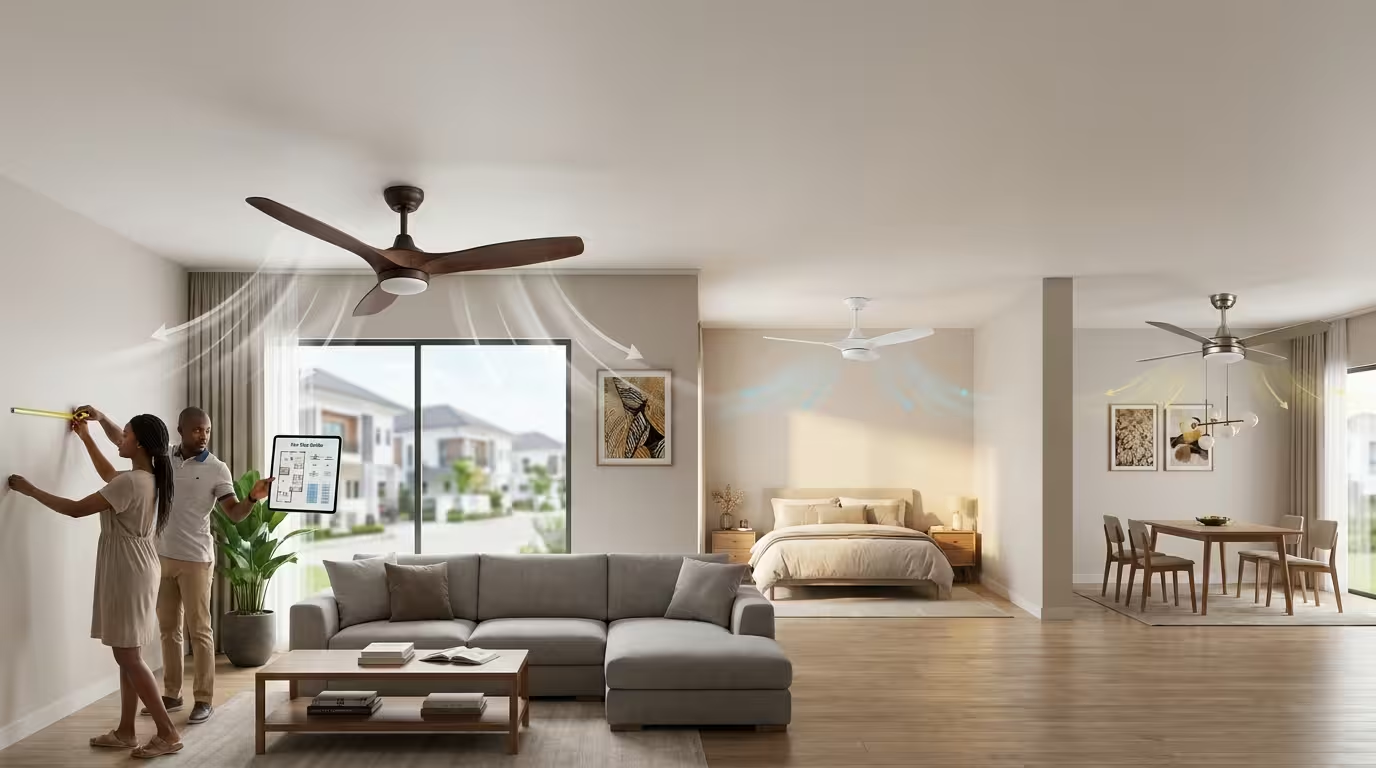
Measure Your Room Before Choosing a Ceiling Fan
Lots of people buy ceiling fans for looks. But the size of the room should be the first factor to consider when choosing which fan to use, rather than the style of the fan.
First, measure the length and width of the room. To work out the floor area in square meters, multiply both numbers together. This measurement is used to determine the most appropriate blade span for the best airflow.
Fans with shorter blades are typically used in small bedrooms, home offices, and study rooms. The oversized fans put in small rooms result in too much air flowing and make the room uncomfortable.
Open-plan interiors and wider rooms for living, dining, and space require wider spans of blades to evenly spread the air throughout the room. Small fans do not work well to move enough air in these rooms.
The size of the ceiling also has an impact on fan performance. The height of the ceiling of a typical Nigerian house is between 2.7 and 3 meters. This is the recommended speed range for most ceiling fans.
Extension rods will be useful on homes that have higher ceilings. By lowering the fan a little, it creates more airflow, which means the blades are closer to people than when the fan is higher, allowing cool air to be closer to the people.
Installation should also be affected by the furniture placement. If the light is too near the fan blades, large wardrobes, bunk beds, tall cabinets, and suspended lighting fixtures could block airflow.
Ensure sufficient space around each fan. This facilitates easy airflow and ensures safety around the room.
Special ceiling fans are needed for outdoor areas, too. For covered balconies, terraces, and verandas, moisture-resistant models are required that can withstand humidity and fluctuating weather conditions.
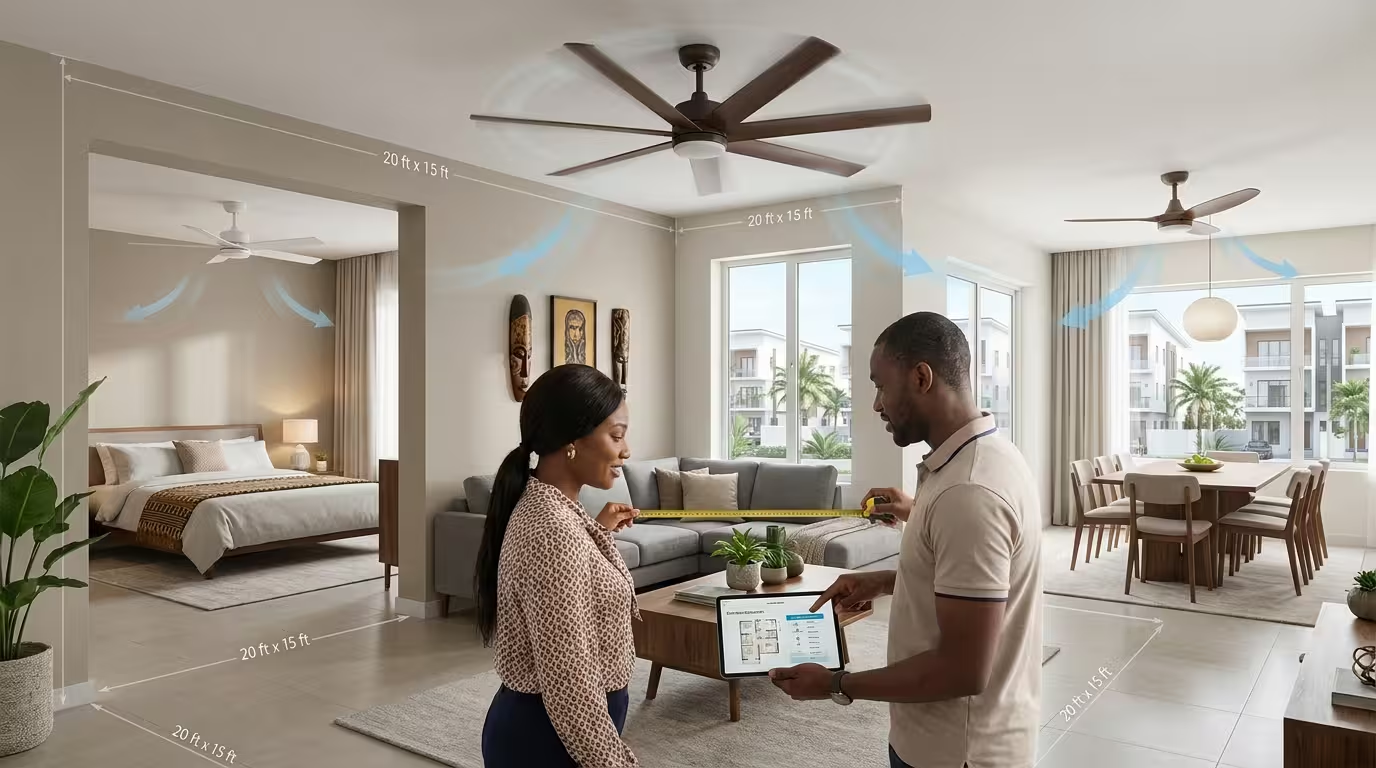
Correct installation is also crucial. Correctly sized fans also don’t function very well if they’re not in the center of the room or if they’re too close to surrounding walls.
Match Fan Size to Each Room in Your Home
Each room is used for a different purpose. This means there is a variation in the amount of air needed around the house.
Medium-sized ceiling fans are ideal for bedrooms since the occupants want the air to flow steadily and comfortably during sleep. Too strong an airflow can disrupt sleep rather than make it more comfortable.
The larger the family, the larger the fan will need to be for the living room, as families tend to be there a lot longer than in other rooms. Longer blades break up the airflow in a broader sitting space.
The dining rooms should be ventilated at normal speed, not at maximum speed. Air movement that is not too strong helps to keep the air moving, resulting in a more comfortable interior; this also helps to prevent items from falling across the table and getting in the way of eating.
Kitchen ceilings are special. When cooking, there is a constant release of moisture, heat, and odors, which need to be constantly ventilated. Ceiling fans and exhaust systems frequently work well together in some situations.
The heat produced while working at the computer is a factor to consider while thinking about home offices. Favorable airflow can help to focus and also decrease the need for air conditioning in the workplace.
Moderate airflow will benefit children’s bedrooms. Very high ceiling fans could cause discomfort for younger residents, particularly at night during cooler nights.
A multipurpose family room is common to many homes in Nigeria. The ceiling fans in these spaces are typically more powerful and need to be able to circulate air in a dynamic environment with growing and shrinking furniture layouts.
Others have a large room and use several small fans. This can help to balance the air, and if you’re using one large fan, you’ll see a more even dispersion of air.
Ceiling fans today are also energy efficient and have adjustable speeds. These controls enable homeowners to control air circulation in response to different weather conditions, all year round.
Further savings can be achieved by selecting inverter-compatible ceiling fans. With the use of a solar system or an inverter, homes are able to make use of fans that consume less electricity.
Improve Comfort While Reducing Electricity Costs
Choosing the right size fan can have a direct impact on the energy efficiency of the house. The properly sized fans cool the occupants of the room and not the whole room, thus decreasing the need for air conditioning.
Ceiling fans should be used counterclockwise in the summer. This direction blows cool air down, which results in a cool breeze over the space that is being used.
Good maintenance also provides better performance. Blades may become clogged with dust, which decreases air flow and causes motors to operate more than they need to.
Use a soft cloth to clean fan blades periodically, e.g., every few weeks. The basic operations increase the efficiency and will help to prolong the life of the same piece of equipment.
Immediately attend to loose mounting brackets. Wobbling fans produce needless noise and wear out the motor parts.
Size is not the only consideration; quality is important, too. The good manufacturers tend to have more powerful blade materials, better-quality electrical components, and quieter motors.
Use fans that have energy-efficient motors if possible. They may be a little more expensive at the outset, but their lower operating costs over time make them more affordable.
The smart ceiling fan is becoming increasingly popular in Nigeria. Nowadays, a lot of models can be controlled remotely, are programmable, can be controlled via a smartphone app, and can be controlled via voice commands.
These amenities not only enhance convenience but also enable homeowners to better control their electricity consumption.
The choice of fan should fit with the room decor. The color and finish of the blades, fixtures, and housing should complement an existing interior design.
Do not just pick fans due to their appearance in showrooms. When buying a performance heater, the first decision should always be made based on the performance. Also durability, energy efficiency, and room compatibility.
It is still strongly recommended to be professionally installed. A competent electrician ensures that no matter what job they do, their installation of the wiring and connections is done safely, in line with building codes in Nigeria.
The right size ceiling fan can make everyday life comfortable and save energy in the home. When Nigeria’s homeowners carefully measure each room and take ceiling heights into account, along with choosing energy-efficient models, they can enjoy a steady flow of air in their homes all year round. Finally, the right choice of smart fans really enhances the quality of life indoors. It saves electrical equipment and provides a long-lasting return on investment as an addition to all homes.
Still have questions?
Navigating the real estate market can be complex. Head over to the iPropty Q&A hub to get expert answers, or ask your own question today!
Explore the Q&A Hub